

These under-the-radar discoveries from this year’s LFF showcase cinema at its most radical, urgent and unexpected.
Beneath the accolade of star-studded galas, this year’s BFI London Film Festival programme managed to welcome an impressive 251 film titles. Aside from big hitters, laurelled new releases and anticipated auteurs, there was a wealth of underseen treasures to be discovered for the curious-minded viewer. This guide to the best of the festival is drawn from unexpected archives and unflinching documentary, resurrecting filmmakers of the past with urgent agendas for the present.
In 2026, cinema has been positioned in many ways to be an increasingly valuable mouthpiece for marginalised voices, and an often precarious forum for inspiring and esoteric form. Luckily, the BFI London Film Festival continues to champion the avant-garde and experimental with dedicated alternative sidebars such as ‘Experimenta’, and bestowing national awards such as this year’s Grierson Prize. However, flying under the radar of red carpet premieres, the following directors are particularly names to keep an eye out for at your local repertory cinema; and will be shattering expectations onscreen for years to come.
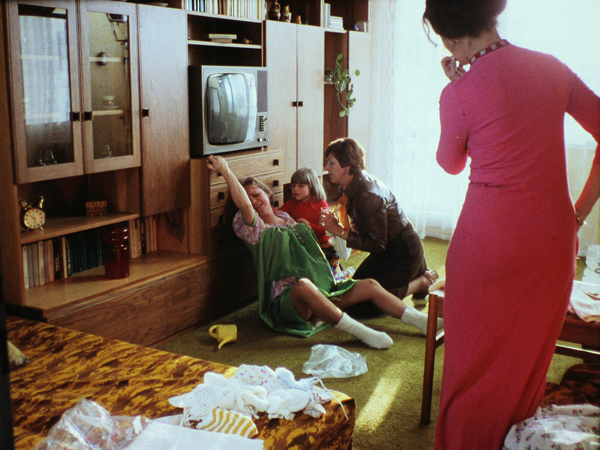
Panelstory, or How a Housing Development is Born
Věra Chytilová
Discerning cinephiles will have noted that among the BFI London Film Festival’s returning strands such as Love, Laugh and Dare, this year’s programme has been subtly inhabited by Concrete-adjacent cinema… Tucked behind the prowess of John Wilson’s feature The History of Concrete is a restoration of this sprawling, surprisingly astute archive work by Czech New Wave provocateur Věra Chytilová. Director of the 1966 cult favourite Daisies, her apartment block foray Panelstory inhabits the same feminist, bizarrist melodrama. However, Chytilová constructs this lesser-known work around a community of late-stage housewives surviving a brittle, concrete deluge; using liminality and jazz to articulate an offbeat city symphony of the 1970s Soviet regime.
The Story of Documentary Film (1990s)
Mark Cousins
One place you’re sure to find endless underseen cinema recommendations is in the filmography of Mark Cousins. Forming just a fragment of his new 16-part series through a global history of documentary, his 90s essay film is bursting at the seams with world-shaking footage – from the microcosms of Claude Nuridsany, the romance of Agnès Varda, and Naomi Kawase’s personal, punctuating style, to the battered handheld relics of conflict, found in Angus Macqueen and Paul Mitchell’s The Death of Yugoslavia. Cousin’s dulcet lyricism guides us in chaptered collections through a decade of close nostalgia, but crucially subverts collective Western memory. He holds testament to rising globalism, and innovative form, but significantly burns a torch towards the singular ability of cinema to recall what humanity may often choose to forget.
Queer Edward II
Theo Rollason
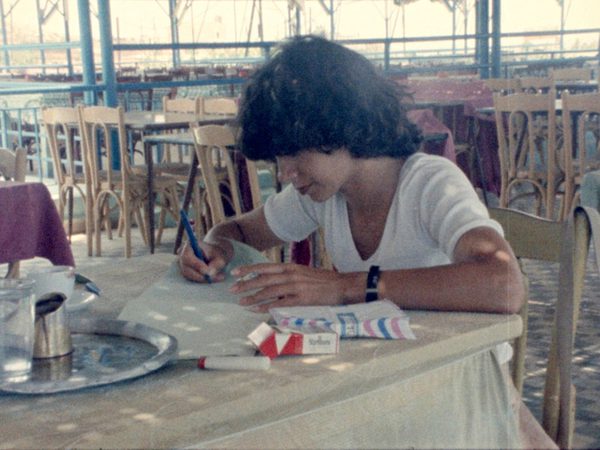
It’s a jubilant homecoming for London-based director Theo Rollason, who scooped up the Queer Lion at this year’s Venice Film Festival for their behind-the-scenes documentary covering the fraught production of Derek Jarman’s Edward II. Using Seamus McGarvey’s never-before-seen archive of betacam footage, Rollason builds an evocative capsule of 1990’s queer activism extending out from the political rife surrounding the production unit, featuring cameos from an emerging Tilda Swinton, Annie Lennox, and the unforgettable Sisters of Perpetual Indulgence. At once hilarious, insightful, galvanising and tragic, Rollason lovingly restores the spirit of Jarman in all his brazen liveliness. As with any activist film, it offers not simply a window into the process of one of British history’s greatest artists, but also the timely reminder that there is still much work to be done.
Revolutionaries Never Die
Mohanad Yaqubi
Another retreat into post-legacy directors, and within the landscape of the 1970s, filmmaker Yohanad Yaqubi eulogises the work of radical documentarian Jocelyn Saab, using the framework of their 2018 email correspondences as well as 115 reels of unedited analogue footage. Portraying the impact of war on domestic territory across Lebanon, Palestine, and Iran, Yaqubi’s voiceover alludes to how film can distance us from subject, but offers an invitation to analyse also. Moments of immersion and reflection prove sparse in the dominating address of contemporary media. However, Saab’s footage doesn’t linger on the graphic images of Palestine intended as spectacle – rather, her considerations of the Palestinian cause stem from how conflict inhabits habit, ritual and practice. Young children tussle with sticks on the beaches, dreaming of guns and knives; an elderly man walks down a dusty street, eerie with silence. Despite its assemblage of inherited reels, Yaqubi’s tribute to a formative voice of militant cinema is perhaps the most pressing and contemporary work from London’s 2026 festival slate.
Masao Adachi Takes a Passport Photo
Kamal Aljafari
One for the fans of Japanese New Wave, prolific pinku director and left-wing radical Masao Adachi (Female Student Guerrilla, Ecstasy of the Angels), goes to have his passport photo taken. At times sweet, softly slapstick and politically enlightening, this 28 minute-long short alludes to the afterlife of a successful filmmaker. What comes after censorship, retrospective, and revolution? Using normalcy as a lens into the life of a disenfranchised artist, Kamil Aljafari’s camera is astoundingly collusive as it lingers on the palpable, shuffling silence of shared encounters. A rejuvenating, humanist fable for a cinematic canon and thorny film wave, often wrought by controversy.
At Night
Beatrice Gibson
Another homegrown success, experimental filmmaker Beatrice Gibson returns with accolade from Locarno Film Festival, winning the title of Best Emerging Director earlier this year, At Night, described by Gibson as “choral autofiction,” weaves a diaristic tale immersed in synth, and dripping in Parisian hallucinogen under the cover of darkness. Inspired by the literary avant-garde, her attentive tale of women speaking on sex, desire, motherhood and difference, feels structured between echoes of Akerman and the bokeh camerawork of Canada’s Rhayne Vermette. Often strangely drifting between perspectives as essayistic meditation, Gibson’s characters never try to convince you that they’re right – but they articulate difference objectively, like whispers intruded on, overhead amidst the murmurs of a late night bistro.
The post Six Radical Discoveries from the 2026 BFI London Film Festival first appeared on Little White Lies.



 Bengali (Bangladesh) ·
 English (United States) ·