
 2 hours ago
5
2 hours ago
5 
The post 10 Minimalist Baby Registry Items You’ll Actually Use appeared first on Penny Pinchin' Mom.
Your baby registry already has 87 items on it, and you’re starting to wonder if you actually need a wipe warmer, a diaper genie for every room, and three different swaddle systems. Spoiler: you don’t.
Most registry checklists push you toward cluttering your home with single-use gadgets that’ll collect dust by month two. The reality? You need about 10 unique registry must-haves that work overtime—not 200 things that solve problems you’ll never have.
This list gives you exactly 10 items that earn their space. Each one solves multiple problems, grows with your baby, or saves you from buying five other things. No filler. No regret purchases. Just the gear that actually pulls its weight when you’re running on three hours of sleep.
What made the cut: a changing pad that goes anywhere, blackout solutions that actually work, the one toy worth owning in year one, a multi-function grower that replaces your entire newborn wardrobe, and six other high-utility picks that do more with less. If you want a minimalist baby registry that doesn’t leave you scrambling at 2 AM, this is it.
Sleep & Room Setup Essentials
1. Blackout Window Film (Not Curtains)
Static-cling blackout film blocks 100% of light, installs in five minutes with zero hardware, and moves with you through three room transitions before age two.
Blackout curtains sound great until you’re dealing with curtain rods, return policies on wrong sizes, and gaps that let in just enough sunrise to end naptime at 5:47 AM. Window film solves this: complete darkness, no installation stress, no permanent changes to rental walls.
Benefits that matter:
Works on any window size (cut to fit) Removes cleanly when you move or transition rooms Actually blocks light (no sneaky gaps) Costs half what quality curtains runCost: $15-$30 for enough film for 2-3 windows | Lasts: Through toddlerhood, multiple moves
The sleep extension you get from real darkness pays back the $20 in one weekend.
2. Sound Machine with Battery Backup
A sound machine with battery backup keeps running during power flickers and travels without hunting for outlets. Most parents realize too late that their plug-only machine is useless during the power outage that happens during the worst sleep regression.
Battery backup means:
No sleep disruption when power blinks Actually portable for travel (hotel rooms, grandparents’ houses) Works during room-to-room transitions One less thing to stress about at bedtimeLook for models with 8+ hours of battery life and both white noise and nature sounds. Skip anything that requires an app to function—you need this to work when your phone is dead and you haven’t slept in 40 hours.
Cost: $35-$60 | Lasts: Through elementary school (families use them for 5-7 years)
3. Zippered Sleep Sacks (Not Swaddles)
Sleep sacks with two-way zippers replace swaddles, transition blankets, and toddler blankets that get kicked off at 3 AM. One product category, four years of use.
Swaddles stop working the moment your baby rolls (8-16 weeks for most), then you’re scrambling to figure out what comes next. Sleep sacks work from day one and keep working through age three or four—no transition stress, no safety concerns about loose blankets.
Register for:
2-3 in 0-6 month size (lightweight for temperature regulation) 2-3 in 6-18 month size (these get heavy use) 1-2 in 18+ month size for toddler yearsLook for two-way zippers (diaper changes without full removal) and TOG ratings appropriate for your climate (1.0 for summer, 2.5 for winter).
Cost: $25-$40 each | Lasts: Newborn through preschool
Skip the $200 swaddle system that becomes obsolete in three months. Sleep sacks work longer and cost half as much.
Space-Saving Clothing & Furniture
4. GillyGro: The Multi-Function Grower
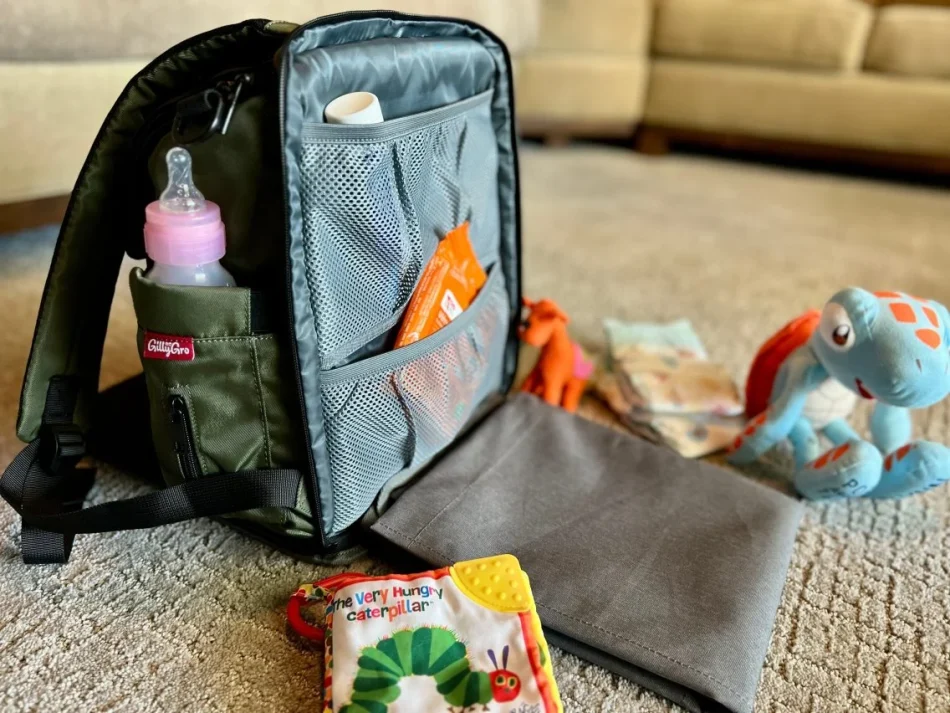
This is the anti-clutter registry pick that replaces your entire newborn wardrobe. GillyGro is a convertible outfit system that grows from newborn through 18 months using adjustable features instead of constant size-ups.
Each GillyGro includes:
Built-in mittens that fold out or tuck away Roll-up footies that convert to pants Adjustable length that grows several inches Two-way zipper for easy diaper changesThe math on this: most babies go through 6-8 clothing sizes in their first 18 months. Parents typically buy 8-12 outfits per size, then watch half of them get worn once before the baby grows out of them. That’s 48-96 outfits collecting dust in storage bins.
GillyGro cuts that down to 6-8 outfits total that actually get used for months instead of weeks. You skip the constant shopping, the size-guessing game, and the guilt about barely-worn clothes.
Cost: $30-$40 per outfit | Lasts: Newborn through 18+ months | Replaces: $400-$600 worth of traditional clothes across multiple sizes
This is the one piece of baby gear designed around “don’t buy anything else.” Put several on your registry in different colors or patterns—this is what you’ll reach for on repeat.
5. Convertible High Chair (Floor to Table Height)
A high chair that adjusts from floor level to standard table height grows with your child’s development and dining setup—no awkward transition to a booster seat that slides around.
Most parents register for either a space-saving high chair or a traditional one, then realize neither setup works when baby graduates to sitting at the table with everyone else. The convertible version handles both phases.
Adjustability that matters:
Floor level for baby-led weaning and early self-feeding Standard height for family meals at the table Removes from base to become toddler chair Tray removes for direct table eatingCost: $100-$180 | Lasts: 6 months through elementary school (as regular chair)
This is the one piece of baby furniture worth spending on—it’s the only chair they’ll need for years.
Daily Use Problem-Solvers
6. Portable Changing Pad with Pockets
What sounds boring saves you dozens of diaper-bag overhauls and frantic searches for wipes. A quality portable changing pad with built-in pockets keeps diapers, wipes, and cream together in one grab-and-go package.
Most parents register for a traditional nursery changing pad, then realize they change 80% of diapers on the floor, in the car, or at someone else’s house. The portable version becomes your actual changing station—the fancy nursery one mostly holds clean laundry.
Look for one that:
Folds into a clutch with a handle Has waterproof exterior and padded interior Includes 3-4 pockets for supplies Wipes clean in secondsCost: $25-$45 | Lasts: Birth through potty training
Skip the $200 nursery changing table. You’ll use a pad on your dresser or floor and save the space.
7. Foam Play Mat (Not an Activity Gym)
A large interlocking foam play mat gives you clean, cushioned floor space that grows from tummy time through toddler play—no awkward transition where the infant gym becomes useless.
Activity gyms photograph beautifully and seem essential, but most babies use them for 8-12 weeks max. Then you’ve got an oversized toy taking up half your living room while your baby just wants to roll around on the floor.
The foam mat instead:
Creates safe tummy-time space from day one Cushions falls when baby learns to sit and stand Defines play area as they become mobile Wipes clean and stores flat when you need floor space back Still useful when toddlers want to build block towersCost: $40-$80 for a 6×4-foot set | Lasts: Birth through preschool
The activity gym will be in your donation pile by month four. The play mat will still be earning its space at age three.
8. Silicone Suction Bowls and Plates (Skip Plastic Sets)
Silicone dishes with strong suction bases eliminate 90% of mealtime floor messes and last through years of dishwasher cycles without staining, cracking, or growing mystery smells.
Most registry guides push elaborate dish sets with matching utensils and cups, then you discover that toddlers flip plates for sport and plastic holds onto spaghetti sauce stains forever. Silicone solves both problems.
Key features:
Suction base actually works on highchair trays Microwave and dishwasher safe (top rack) No staining from tomato-based foods Flexible edges make food scooping easier for learning eatersRegister for 3-4 bowls and 2-3 divided plates. Skip the 47-piece feeding set with bottles you won’t use and cups that leak.
Cost: $12-$18 per piece | Lasts: Through preschool
9. Toy Bar That Attaches to Car Seat
This $15 toy holder saves dozens of pulled-over stops to retrieve thrown toys and keeps baby entertained without you driving with one arm twisted backward.
The toy bar clips to car seat straps and suspends toys within baby’s reach but close enough that they can’t launch them into the front seat abyss. It’s the only car toy solution that actually works past month two.
Why this beats loose toys:
Toys stay within baby’s reach Nothing rolls under seats or gets lost You’re not constantly pulling over Rotates easily to try different toysPair this with 2-3 teething toys with loops, and you’ve solved car entertainment for the first year.
Cost: $12-$20 | Lasts: Until they can unbuckle themselves
10. One Quality Wooden Toy Set
A simple wooden block set or stacking toy provides more developmental value and longer play life than 30 plastic toys combined. This is the only toy worth registering for in year one.
Babies don’t need toy rotations or elaborate playrooms—they need a few open-ended objects they can explore different ways as they develop. Wooden blocks work for a 6-month-old learning to grasp and a 3-year-old building towers.
Why wood beats plastic toy collections:
No batteries to replace at 2 AM Grows with child’s development (same toy, new uses) Doesn’t break or wear out Actually gets played with for years instead of weeks No flashing lights or sounds to drive you into the backyardRegister for a 30-50 piece block set or a quality stacking toy. That’s it for toys in year one—everything else is clutter you’ll trip over.
Cost: $40-$80 for quality set | Lasts: Through elementary school
If you’re choosing between these 10 items and a standard registry with 200 products, go with what you’ll actually use. The portable changing pad, blackout film, and GillyGro alone will save you from buying dozens of other things—that’s the whole point of a minimalist baby registry that focuses on baby registry items you’ll actually use. Real-world utility beats registry checklists every time.
Your next 3 steps:
Add the portable changing pad and blackout film to your registry this week—these solve immediate newborn problems. Register for 3-4 GillyGros in different patterns to replace your entire newborn wardrobe. Wait 2 weeks before adding anything else—most registry panic-adds become donation-pile regrets by month six.Most of what didn’t make this list falls into two categories: stuff you won’t use or stuff you can grab later if it turns out you need it. You can always add more, but you can’t un-clutter a house full of regret purchases.
The post 10 Minimalist Baby Registry Items You’ll Actually Use appeared first on Penny Pinchin' Mom.


 Bengali (Bangladesh) ·
  English (United States) ·