
 19 hours ago
11
19 hours ago
11 
Being a student of Monica Ferrell’s was a singularly influential time in my life. Immediately upon meeting her, I wanted to be like her: to enter a room with the same serious allure, the same unassuming self-possession. And when I first read her poems—fierce, sophisticated, sensual in every sense of the word—I didn’t want to write poems like them; I wanted to have written them myself.
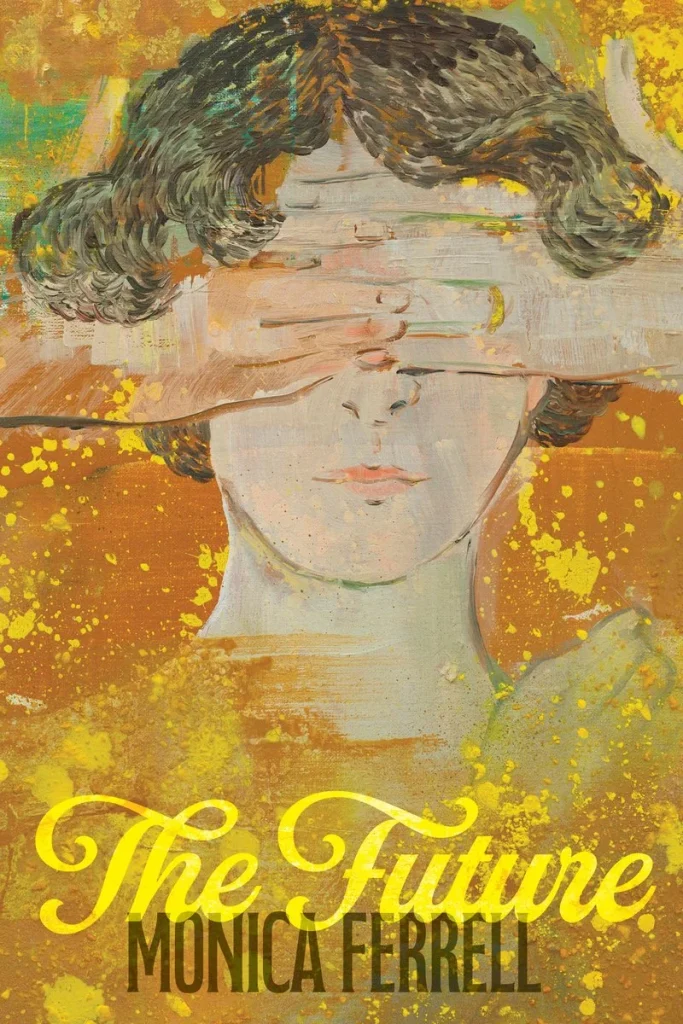
Now, instead of envy, I’m overwhelmed with gratitude for her new book, The Future, which continues to teach me how we can maintain an urbane, old-soul sensibility in the mundane horror of the new world order. The poems strike the most inevitable and surprising balance among the myths and archetypes from the past, the technological artifacts of the present, and the signs of mortality and rebirth always on the horizon.
Monica and I met to talk about The Future: its influences, its anxieties, and ultimately, its optimism.
Zachary Pace: Both You Darling Thing, your second book of poems, and The Future contain so much of the modern world, where your first book of poems, Beasts for the Chase, takes me back to less technological times. For example, the computer appears in a few poems of The Future. Has your writing process changed at all now that computers are such a central part of daily life?
Monica Ferrell: I wrote a lot of the first book by hand, in notebooks, and would transfer poems over to the computer, but by the time of writing the last poems in that book, I was typing directly into the computer. The second book was definitely written into the computer, but if I had writer’s block, I’d try experiments like writing on a typewriter. The Future was also written at the computer, and I felt a one-to-one relationship with the screen as opposed to the pen or notebook.
I’m also writing fiction, and in the last two years, I’ve gone completely longhand. For one thing, it’s too easy to move text around on the computer; I feel like I’m just rearranging chairs most of the time. When I’m writing a piece of fiction longhand, I feel like I have a single thread that I’m spinning through the pages. I feel continuity and forward motion.
When I open the computer now, as opposed to when I was a student, my main associations are bad news, work emails, or internet shopping. These things take me so far away from the sacred space of writing, that’s also why I’ve turned to writing fiction by hand. But the poems are still written on the computer, mainly because it’s so easy to move around the line breaks that way, and to change the stanza shape. Formal plasticity. Formal changes can be made instantly.
A lot of poets say that a first book is the invention of the self—inventing the myth of the self. My first book was made out of everything that I read as a child—stories that spun the thread of who I was making myself to be, those cultural artifacts that we cleave to as young people and derive a self out of. Some of the poems were inspired by travel. I was living in Brooklyn, but I don’t think much of Brooklyn is in there. My second book was more real-worldly, but the scenes are centered in romance, with some recognizable places: St. Petersburg in Russia, for example. I think of the second book in an urban setting. People are meeting each other in places of contemporary reality.
ZP: This new book is rooted firmly in a rural setting. How did moving to a new place change your writing?
A lot of poets say that a first book is the invention of the self—inventing the myth of the self.
MF: The Future contains so much Vermont. It’s on the first page: “Monica, you live in Vermont: / There are no volcanoes.” The pandemic was one reason for that. We were stuck at home for three good years there. The most exciting thing was planning dinner or having a package delivered, instead of the primary experiential quality of our lives being relational with others in a broad scope. During the pandemic, we also moved from Brooklyn to Vermont. I’m thinking of a line in a novel by a friend of mine: “In New York City, it’s easy to mistake the city’s bustle as your own.” It’s easy to get swept up in the great flows of financial capital and feel like you’re a part of it. In Vermont, that flow feels far away. The house you’re living in doesn’t touch other people’s houses. The silence is different. The month of March is different. A few of the poems are set in March. You hardly notice March in the city because of all the lights. In Vermont, there’s not a lot of bustle. The drama and the movement have to come from you.
The Future also has a lot to do with having kids, and being responsible for their reality. Nothing gets made unless I make it. These constitutive elements of their reality, which probably seem so firm to them—a toy chest, for example—only got there because somebody chose it. Having to provide a built environment for people who rely upon it is a big part of The Future.
ZP: “The future” itself is most tangible in the experience of having a child, in creating a life that extends beyond your lifetime. I was so moved by “The Life of Mary,” in how it imagines not only Mary, mother of Christ, but the mother of Mary, Saint Anne, who created a future that created the future that is the bedrock of our history.
MF: I applied for a grant to go to Munich because I wanted to see where Rilke was when he wrote his collection Life of the Virgin Mary, or Das Marien-Leben. While I was in Munich, I went to the Alte Pinakothek and found a room devoted to the Meister des Marienlebens, “Master of the Life of Mary,” where I saw a cycle of paintings with the same title as the Rilke cycle. It’s very clear to me that he was inspired by these paintings. But he hid his traces, because he never mentions this painting cycle. Actually, many years later, in his letters, he said he was thinking about Titian. I think he was trying to obfuscate the fact that he was heavily indebted to these paintings that had the exact same title. For my “Life of Mary,” I decided to go back to the source text, the paintings in Munich, and write one-to-one ekphrastic poems from those canvases.
The poem wound up thinking about my own experience of giving birth. I got out some of my resentments about how the mother and even the father are left behind in the sacralization of and wonderment around the baby. Over the course of the sections, the poem moves away from Jesus to see that every birth is a miracle. It’s really so crazy how we come from other people. Leaving aside Jesus, I was also thinking about the mother of John the Baptist—what it is to raise a child who will have his head cut off. All the children we raise . . . many of them will die horrifically, or struggle with schizophrenia, or perpetuate violence against somebody else. They’ve left your hands. Still, we keep spinning on into the future, with no idea how they’ll braid into the tapestry we weave together.
ZP: One of my “subway takes” is that misogyny has everything to do with the paranoid, phobic, and even envious response that male-bodied people have to the life-giving power of a woman’s body.
MF: I 100 percent agree. So many of the mythologies around the world are trying to wrest this power and accomplishment from women in order to reframe it as negative. I’ve always been so interested in prehistoric people, and they are a big focus of this book. Prehistoric art is overwhelmingly preoccupied by fertility and its crazy power.
ZP: In a few poems, when the speaker imagines the future, I sense a wistfulness around the language that the children will have to invent for things we don’t even know about yet.
I hate supermarkets. They super-depress me.
MF: In my “Duino Elegies,” I’m thinking about everything invented in the past—guns, woodwinds, all the random crap in the world—and how the child starts out with no language but will go on to invent names for all the things that will be invented in the future. And at the end of the poem “Subclinical”—“To greet this revelation of a future / With those new names it will need”—I’m thinking of a dystopian future, and how the child will have to invent new words for the horrors of climate catastrophe; these will be part of the child’s lingo, but we don’t know what they are yet. In the “Cosmos” poem, I give language to my children: “By filling their mouths with the whole jar of marbles: / English words in mincing syntax.”
To see a child start out with no language, and to explain every idiom or cultural artifact—even answering a question like, “What is an advertisement?” Well, an advertisement is used to sell someone something they don’t need. “Why would anyone do that?” Because people are greedy—to explain every word, you’re unveiling part of the cultural complex. It’s not as simple as giving a dictionary definition. I also don’t want to be too over-determining. I want to give the space for my children to reach their own conclusions.
You asked about wistfulness. That comes from an awareness of my mortality. I just turned 50. Like many young people, I once thought death was glamorous, reading Sylvia Plath and Thomas James. Now, among my peers and friends, we keep seeing people of our generation with their lives cut short. My dear friend Paul La Farge died of brain cancer at age 52. So, I’ve been grappling with this topic.
ZP: The speaker is put in touch with mortality in a profound way in the two poems that take place in a supermarket: “At the Stop & Shop” and “At the Price Chopper.”
MF: I hate supermarkets. They super-depress me. As a single person in New York, I could get by for a long time on very little in the way of food. But now . . . when we moved to Vermont during the pandemic, we’d go on one stock-up trip for the whole week. It was a horrible enterprise.
But in a rural place, especially in winter, it’s one of the only places you see anyone. It’s like the town square. It’s where you get to know who you’re living with. And in those poems, I’m thinking about where we are in relation to our ancient ancestors. Going to the supermarket to buy a jar of hot honey is so absurd compared to the life-and-death, communal quality of having to hunt the mammoth together and break down its body into parts. The animals that they were hunting became totems in their religious culture, so it was meaningful to their spiritual life, how they were feeding themselves. Now . . . there’s just so much plastic. You can’t go to the market without encountering plastic. The poems are a way for me to think about how I’m poisoning myself and everyone around me, even as I’m trying to nourish them. In the same way, the grocery store is a very intimate space, you’re standing at the conveyor belt watching a stranger’s Styrofoam tray go by with its cold chicken breast—that’s going to be part of his body pretty soon.
ZP: On the flip side of this communal feeling, I’m remembering the encounter in “You Can Fold Me,” when the speaker is belittled at a voting booth while the children are having a tantrum and responds: “Fuck you // I invented the future / What the hell is it // You do you think / You’re so big?”
MF: That really did happen, at a voting booth; a man cut in front of me in a queue of voters and said that I seemed to be too occupied. And it was already such a challenge for me to be standing there with my baby carriage and squirming little kid. I didn’t actually say “fuck you.” But the idea of having invented the future came out of feeling like to him my vote didn’t count or that I had less of a say because I had my two kids there, when in fact, I should probably have three votes.
We nourish ourselves on the words of others. Their writing enters your bloodstream.
Part of why I didn’t originally think I would have kids is because I wanted to give more of myself to writing. This is often a question for a female writer. And historically, there’s been a cultural bias against “domestic” subjects. Poets wouldn’t write a single word about cleaning the floors or tidying the house. It meant that you weren’t a serious writer, that your mind had been corrupted by the mundane. That’s why I laugh to myself about a poem like “At the Price Chopper”—why not put Alexander the Great alongside an Alas-poor-Yorick moment about my late father, all while the speaker is out looking at some Granny Smiths in the grocery store.
ZP: I think that has to do with how, historically, many writers were wealthy and had staff or spouses to do that work. I think it’s beautiful how the diurnal stuff comes into poems because we have to do it ourselves.
MF: Agreed, class is such a big part of it too: people thinking, “This is beneath me; let some other class of person handle it.” That need to categorize—this type of work is for women, this is work for lower-class citizens, this is work for people of color—that kind of societal hierarchical thinking is absolutely reflected in what shows up in the literature. And then if the domestic sphere becomes subject matter only for women, the working class, and people of color, that’s part of the machinery of how these groups of people can get dismissed as writers.
ZP: Literature is another one of the most tangible forms of the future, in this book and in your work at large. But in your “Duino Elegies,” the speaker says, “Every word of writing is a form of goodbye.” What do you think of that paradox?
Finding Our Political Future in Poetry
In “Let the Poets Govern,” Camonghne Felix considers fugitivity, political responsibility, and poetic form as a blueprint for resistance

MF: Writing is one way to have futurity. We nourish ourselves on the words of others. Their writing enters your bloodstream. And when I finished writing my first book, I thought, I can die now, because part of me is going into the future. My words will be part of the circulation, the discourse, and these words will keep getting inflected with other people’s associations. We become part of an inheritance—the cultural legacy. I’m thinking of something a professor once said: Even if you’ve never read Dante’s Inferno, you know Dante’s Inferno because it’s a part of cities; it’s a part of how we think about organizations of space. The interpenetration of literature and nonliterary realms is so intense.
I’m also interested in chemical traces and what happens to our bodies after we die. If I can somehow manage being left outside as a corpse, I will do it, because I want to put the magnesium and other elements back into the earth and have them reform into other things. The words we create are like that. And it’s not just literature, it’s being part of each other’s dreams. I’m going to go on remembering my dead friends. They are a constituent part of my present experience that goes into what I pass on as well. And that’s pretty joyful. As much as the book has to do with mortality, it has a joyful element: looking around and saying, hey, if I die, it’s okay, because others are carrying on—yes, the children, but so many other things I’ve entered into, just as I have been entered into too.
The post Writing Is a Way to Have Futurity appeared first on Electric Literature.




 Bengali (Bangladesh) ·
  English (United States) ·