
 1 day ago
4
1 day ago
4 
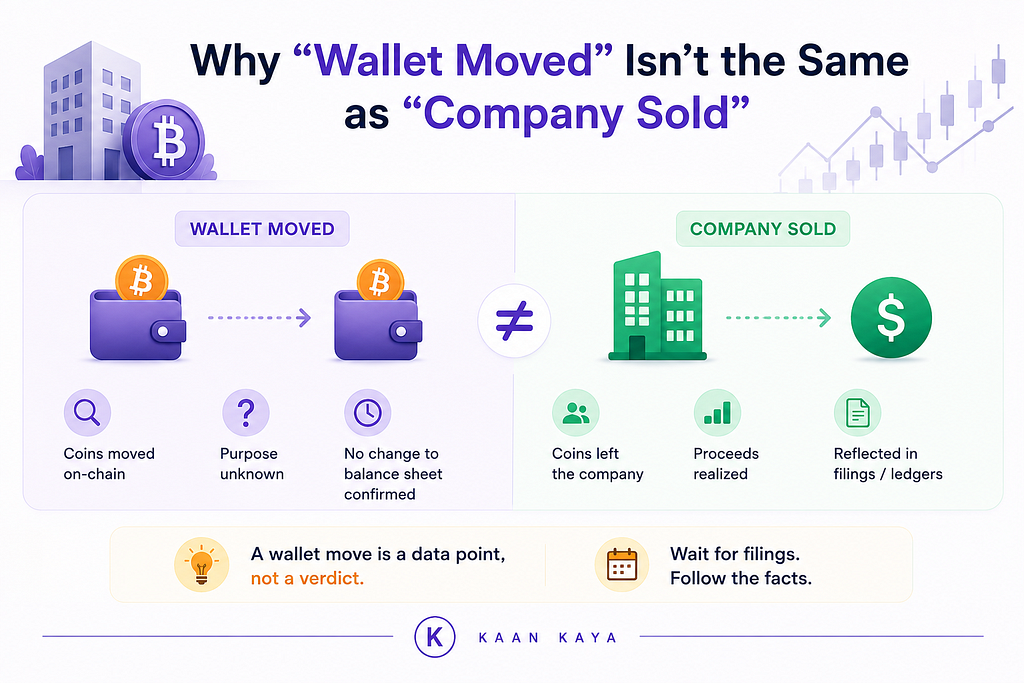
Every time a corporate Bitcoin address moves eight figures, the crypto feed reads the same way: someone is dumping. That instinct isn’t irrational. For years, large treasury wallets sat still, so any sudden outflow looked like a signal worth trading on.
This week gave that instinct a workout. A wallet linked to Strategy sent out 1,030 BTC, worth roughly $66 million, just two days after the company disclosed an actual sale of 1,638 BTC for its preferred-dividend obligations. Lookonchain flagged the transfer with a pointed question about whether Michael Saylor was “dumping” again, and the market read it as a sequel.
Here’s the problem with that read. On-chain attribution tells you an address probably belongs to an entity. It tells you nothing about whether coins changed custodians, moved to a trading desk, or actually left the balance sheet. Strategy’s own ledger still showed 842,138 BTC as of Aug. 2, and the new transfer happened after that cutoff, meaning nothing yet confirms it as a sale.
MARA’s parallel move, 6,000 BTC to Two Prime, makes the same point from the other direction. That’s a known managed-account relationship, not a mystery wallet, yet the market response was structurally identical: assume disposal first, ask questions later.
The real shift isn’t in these companies’ Bitcoin policy. It’s in how thin the line has become between an internal transfer and a market-moving event, purely because disclosure still runs on filing schedules while blockchains run in real time. Until an 8-K or a ledger update lands, a wallet move is a data point, not a verdict.
Why “Wallet Moved” Isn’t the Same as “Company Sold” was originally published in The Capital on Medium, where people are continuing the conversation by highlighting and responding to this story.





 Bengali (Bangladesh) ·
  English (United States) ·