

So far in 2026, the transport trade union RMT has announced six strike dates for their members working on the London Underground (two each in April, May, and June).
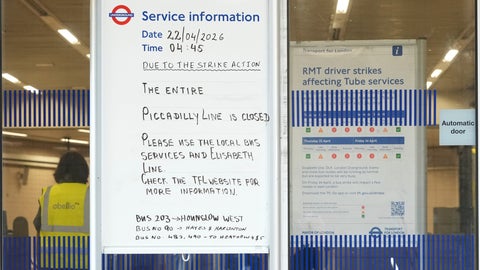
This week (20-27 April), that’s meant commuters have had to deal with delays, cancellations, and reduced service on multiple Tube lines.
We’ve written before about where and when you can expect these “serious disruptions”.
But why are the strikes happening in the first place?
Why are the 2026 Tube strikes happening?
They were announced after TfL offered some drivers four-day work weeks, which means that they can opt to work for longer hours over fewer days.
Currently, most drivers work a five-day work week. The four-day version compresses their hours across fewer days. It’s being tested on the Bakerloo line at the moment.
The Guardian said that another union body, Aslef, supports the four-day work week.
But the RMT says that the plan TfL has proposed might impact the safety of their drivers and passengers, and that it could mean drivers only get 24 hours’ notice before their shifts are announced. They also say TfL “U-turned” on negotiations.
In response, the TfL said the four-day is optional and that it’d improve the service’s reliability and flexibility.
Not all drivers are taking part in these strikes. Members of ASLEF, for instance, are not involved; over half of London Tube drivers are ASLEF members.
Here’s what the RMT, TfL, and ASLEF have have told HuffPost UK so far:
1) RMT
“Our objection to the imposed ‘fake four-day week’ is that it amounts to five days’ work compressed into four. This includes reduced flexibility over shift patterns, with the potential for only 24 hours’ notice of what shifts people will be doing, serious concerns from our members about shift length and resulting fatigue impacting safety in a safety-critical role like tube driving, and the fact that Transport for London has made no new offer despite months of negotiation,” a spokesperson told us.
“The strikes are going ahead because TfL said they would negotiate on all elements of the proposal and then U-turned, saying to us they would go ahead without any changes to their original proposals. That means RMT is in the position where we have nothing new to offer our members, leaving them no other choice than to take strike action.
2) TfL
Nick Dent, director of customer operations for London Underground, said: “We urge the RMT to call off this strike, meet with us and avoid any further disruption to Londoners. While we have been able to run more services than planned over the last 24 hours, we expect significant disruption to continue into Friday and the level of service we can provide will vary across lines, so customers should continue to check before they travel for the remainder of this week.
’We have set out proposals to the RMT for a four-day working week which are supported by the other Trade Union representing London Underground drivers. This allows us to offer train operators an additional day off, whilst at the same time bringing London Underground in line with the working patterns of other train operating companies, improving reliability and flexibility at no additional cost. The changes would be voluntary, there would be no reduction in contractual hours and those who wish to continue a five-day working week pattern would be able to do so.”
3) ASLEF
A spokesperson for ASLEF said: “We are surprised that the RMT has decided to take this action. The voluntary four-day week gives Tube train drivers an extra 35 days off every year, with rosters based on a 34-hour working week in return for some fairly minor changes to working conditions and moving to electronic, rather than paper-based, systems for booking on for duty. And, as it is voluntary, anyone who wants to keep working a five-day week will be able to do that.”





 Bengali (Bangladesh) ·
  English (United States) ·