
 3 hours ago
8
3 hours ago
8 
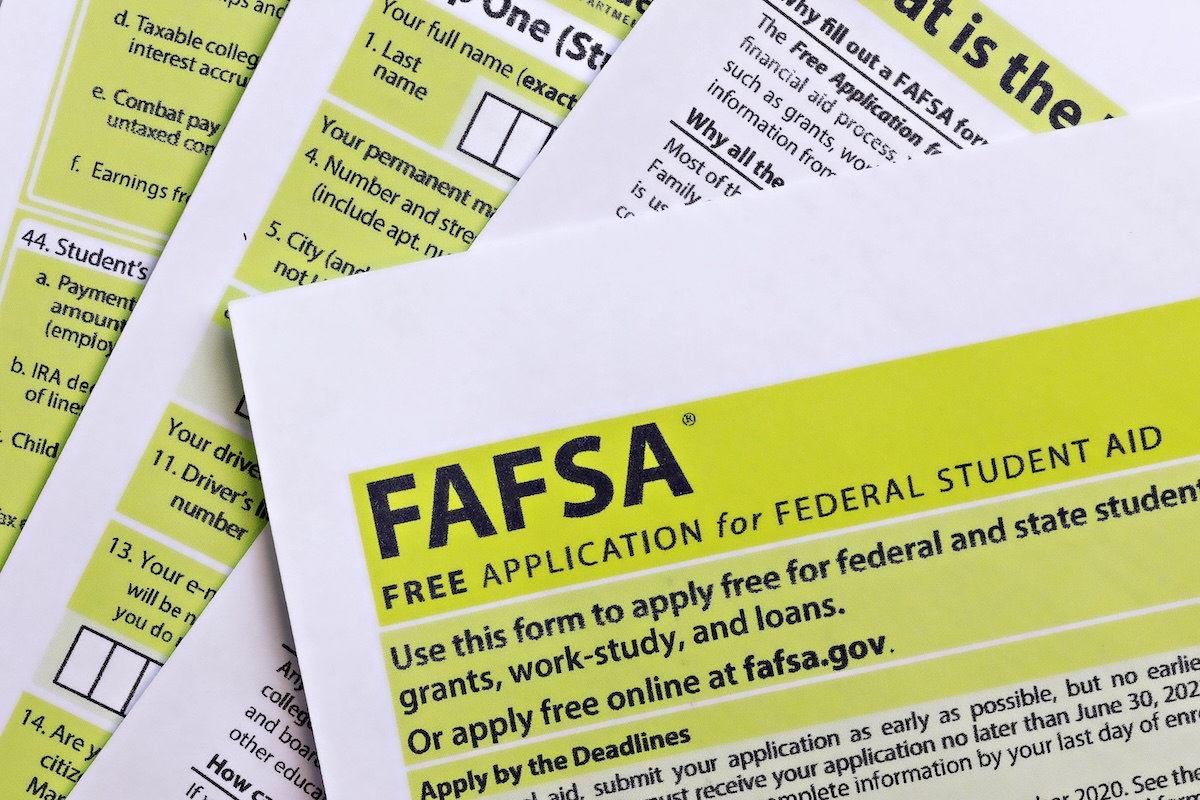
The Question
I saw that the FAFSA opened this week, but I feel like we make too much for financial aid. We’re right around $125,000 a year and our daughter is a senior. Every time I bring it up, someone tells me not to bother.
Should we even still fill it out?
— Rick
Welcome to the Friday mailbag, where we take one reader question and answer it. Have one? Send it to us — details at the bottom.
The Short Answer
File it, and file it now while the form is open early. It’s important to note that the FAFSA is the application for financial aid. It, by itself, does not really unlock anything except for a federal Pell Grant and federal student loans. The application then goes to state grant and scholarship agencies and the universities, where larger dollars of financial aid are found.
At $125,000 you’re in the range where families most often assume they’re disqualified and most often turn out to be wrong, especially depending on the schools you’re looking at. There’s also a chance your state requires it for her to graduate.
The FAFSA itself takes about 10-15 minutes – and we call it the best free lottery ticket for higher education. Don’t leave potentially free money on the table.
The FAFSA Opened Early This Year
The 2027-28 form went live this week, ahead of the usual October 1 date, in what the Department of Education is calling the earliest launch in the program’s history for the second consecutive year.
Under Secretary Nicholas Kent said the form now takes about 15 minutes on average to complete.
Filing early is worth actual money rather than just peace of mind. State grant programs and institutional financial aid funds are frequently awarded until they run out, so families who file early can be ahead of those waiting. Our FAFSA deadline rundown lists the federal, state, and school dates, and the state ones are usually the ones that bite.
An early application also gives you time to fix problems. A mismatched FSA ID, a verification request, or a correction can take days or weeks, and having that happen in October rather than February is the difference between an inconvenience and a missed deadline.
There Is No Income Cutoff
Remember, the FAFSA is just the application. There is no income cutoff and nobody is turned away from making too much.
Each individual financial aid program has it’s own rules, which is where the confusion starts. Pell Grants have real income limits tied to the federal poverty guidelines, and people generalize from Pell to the entire system. But Pell Grants cap at $7,395 per year, and are generally the smallest dollar amount of financial aid awarded.
Our breakdown of FAFSA income limits covers why families well into six figures still file and still receive aid.
Income alone doesn’t produce your Student Aid Index either. Family size and assets both move the number, which is why two households reporting the same salary can have two different results. Running your own figures through our SAI calculator takes a few minutes and tells you more than any rule of thumb about income ever will.
What decides need is your SAI measured against a specific school’s cost of attendance, not your salary considered in isolation. At a college charging $88,000 a year, a family at $125,000 frequently shows demonstrated need. Meanwhile, at an in-state public charging $28,000, the same family may not. A truth most families miss is that if you are relying on financial aid, most state schools won’t help you – you need to look at private colleges.
Our explanation of what counts as a good SAI puts the number against real sticker prices.
Your State May Require It
In the last few years, a number of states have actually started requiring high school seniors to fill out the FAFSA. Depending on your state, you may need to fill it out or request a waiver.
The count has moved around as legislatures have added and repealed these rules, but currently 12 states require it. Most of these policies include an opt-out waiver a parent can sign, which means the requirement rarely traps anyone, but discovering it in May of senior year is a worse experience than handling it in October.
Even where it isn’t mandatory, some districts and high schools track completion rates and build counseling around the form. A senior whose family skipped it can end up outside a process her classmates are being walked through.
What You Give Up By Skipping It
Federal student loans run entirely through the FAFSA, and the FAFSA is the application. Skipping the form means your daughter borrows privately or not at all, giving up the fixed federal rate, income-driven repayment, and access to student loan forgiveness programs she may want in fifteen years.
That single consequence outweighs the twenty minutes the form takes, and we cover it alongside several other reasons to file regardless of income.
Institutional aid is the larger piece and the one families underestimate. Many colleges require a FAFSA on file before awarding their own grants, and some attach merit scholarships to it even when the award has nothing to do with need. A school can’t pull money for your daughter from a fund that requires a form she never submitted.
State grant programs frequently use FAFSA data as well, and several states set parameters considerably above the federal ones.
What Changed Since The Last Time You Heard About This
Advice from parents whose children enrolled a few years ago may point in the wrong direction now. The FAFSA Simplification Act rebuilt the formula, replaced the Expected Family Contribution with the Student Aid Index, and shifted where various thresholds fall.
A GAO review found the overhaul added roughly 1.9 million students to the Pell Grant rolls, while separate rule changes have moved where the middle-class Pell cutoff sits. Neither is likely to reach a household at $125,000, but both explain why secondhand advice about who qualifies has aged badly.
The 2027-28 SAI chart shows where your income actually lands under the current formula, which is the fastest way to replace a guess with a number.
What To Do This Week
Create FSA IDs for your daughter and one parent first. If you have to verify your identity, it can add several days to the process.
Gather the tax return the form pulls from, along with current balances for any accounts you’ll report. Knowing which assets count and which are excluded matters more than filing fast, and a miscategorized asset is the most frequent reason a family’s number comes back higher than it should.
Submit in the next few weeks rather than waiting for spring. The early opening is only an advantage if you use it, and the funds awarded on a rolling basis go to families who file first. Our recommendation is to complete the FAFSA before Thanksgiving.
Keep your documentation together in case you’re selected for verification. It’s a routine sampling process rather than an accusation, and families with paperwork ready clear it in days.
Where People Get This Wrong
The most expensive mistake is treating the FAFSA as a means test you either pass or fail. It’s an application for access, and most of what it unlocks for a family at your income has nothing to do with demonstrated need.
Another is assuming an SAI number is the definitive answer. Colleges build their own awards on top of the federal figure, and two schools with identical sticker prices routinely produce packages that differ by tens of thousands of dollars.
The last one is letting a neighbor’s experience decide it. Financial aid depends on your household, the school, and the year, and someone else’s outcome three years ago tells you very little about yours.
Send Us Your Question
Got a student loan, financial aid, or money question you can’t get a straight answer on? Send it to us and we may answer it in a future Friday mailbag.
Reader Mailbag
Editor: Colin Graves
The post We Make Too Much For Financial Aid. Should We Still File The FAFSA? appeared first on The College Investor.





 Bengali (Bangladesh) ·
  English (United States) ·