
 2 hours ago
4
2 hours ago
4 
The post Turkey Thawing Times by Weight appeared first on Penny Pinchin' Mom.
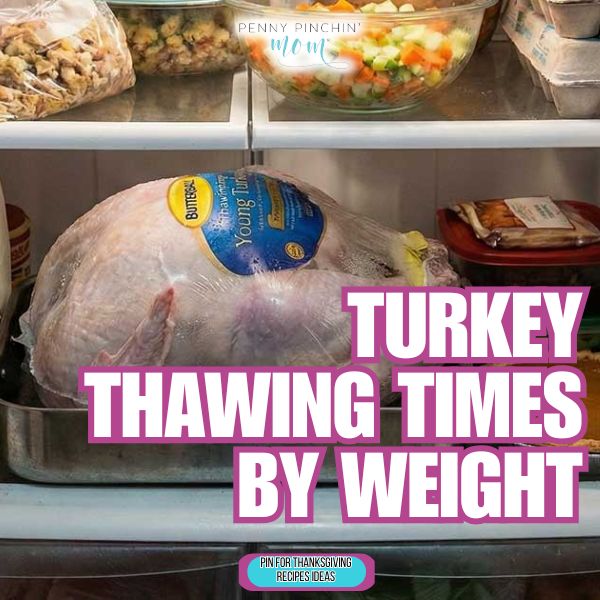
You pull the turkey out of the freezer four days before Thanksgiving, confident you’ve given yourself plenty of time. Then Thursday morning arrives, and the bird’s still rock-solid in the center. You’ve just learned the hard way that knowing how long to thaw a turkey based on its weight is the difference between a safely thawed bird and a frozen disaster.
A 12-pound bird needs three full days in the fridge, while a 20-pounder requires five. Use the wrong approach or skip the math, and you’re either rushing a dangerous cold-water thaw on Thanksgiving morning or serving dinner at 10 PM.
This guide gives you exact thawing times based on your turkey’s weight, covering both refrigerator thawing (the safest, most hands-off method) and cold-water thawing (your backup plan when time’s short). You’ll know exactly when to move that bird from freezer to fridge, plus what to do if you’re behind schedule. The thawing chart below shows times for turkeys from 8 to 24 pounds, so you can plan around your family size and avoid the frozen-center panic.
Thawing Times by Weight and Method
The USDA recognizes two safe thawing methods: refrigerator thawing and cold-water thawing. Your turkey’s weight determines how long each method takes, and getting this calculation right means the difference between a stress-free cook and a Thanksgiving morning crisis.
Safe Turkey Thawing Times
| Turkey Weight | Refrigerator Time (40°F or below) | Cold Water Time (change every 30 min) |
|————–|———————————–|————————————–|
| 8–12 lbs | 2–3 days | 4–6 hours |
| 12–16 lbs | 3–4 days | 6–8 hours |
| 16–20 lbs | 4–5 days | 8–10 hours |
| 20–24 lbs | 5–6 days | 10–12 hours |
Refrigerator thawing requires 24 hours for every 4–5 pounds of turkey. Place the bird breast-side up in its original wrapper on a rimmed baking sheet (to catch drips) on the bottom shelf of your fridge. This method keeps the turkey at a safe 40°F or below throughout the entire thaw, preventing bacterial growth. Once fully thawed, the turkey stays safe in the fridge for 1–2 additional days before cooking.
Cold-water thawing takes 30 minutes per pound but requires constant attention. Submerge the wrapped turkey in a sink or large container filled with cold tap water. Change the water every 30 minutes to keep it cold enough to prevent bacterial growth. The turkey must stay in its leak-proof packaging, and you’ll need to stay home the entire time to manage water changes. Cook the turkey immediately after it’s fully thawed using this method.
Never thaw a turkey:
On the kitchen counter (enters the danger zone of 40–140°F where bacteria multiply rapidly) In hot water (brings surface temperature above safe levels while center stays frozen) In the garage or basement (temperature fluctuates too much to stay consistently safe) In the microwave (too large to thaw evenly, plus you’d cook parts of it)What to Do When You’re Behind Schedule
You counted wrong, forgot to move the turkey, or bought a bigger bird than planned. Now it’s Tuesday night and your 18-pound turkey needed to hit the fridge on Friday.
If you’re 1 day behind: Switch part of the thawing to cold water. Keep the turkey in the fridge as long as possible, then finish the final 8–12 hours using the cold-water method the morning before cooking. An 18-pound turkey that’s been refrigerating for 3 days instead of 4 needs about 4–6 hours in cold water to finish thawing.
If you’re 2+ days behind: Commit to full cold-water thawing starting early Thanksgiving morning (or the night before if someone can handle overnight water changes). A 16-pound turkey needs 8–10 hours of cold-water thawing, so if you’re cooking at 2 PM, you’ll need to start the cold-water process by 4–6 AM. Set alarms for every 30 minutes and prep a podcast queue.
If your turkey’s partially thawed: Check flexibility in the joints and whether a meat thermometer slides into the thickest part of the breast. If the thermometer hits ice or the legs don’t move freely, the turkey needs more time. Don’t cook a partially frozen turkey because the outside will overcook while the inside stays raw. Plan for an additional 50% cooking time if you absolutely must cook from partially frozen (and use a meat thermometer to verify 165°F throughout).
Emergency Cold-Water Thawing Timeline
Example timeline for Thursday 2 PM dinner with a 16-pound turkey:
Wednesday 10 PM: Start cold-water thaw Thursday 6 AM: Turkey fully thawed, begin prep and seasoning Thursday 8 AM: Turkey in oven at 325°F Thursday 1:30 PM: Turkey reaches 165°F, start resting Thursday 2 PM: Carve and servePlan backward from your target dinner time, adding 3–4 hours for cooking (15 minutes per pound at 325°F) plus the full cold-water thaw time. If the math doesn’t work, push dinner back or buy a smaller bird from a store with fresh turkeys.
How to Tell When Your Turkey Is Fully Thawed
A turkey looks thawed on the outside long before the cavity and inner meat reach safe cooking temperature. These checks confirm the bird is completely ready to cook, preventing the raw-center disaster that adds hours to your cook time.
Physical thaw checks:
Legs move freely in their sockets without resistance or cracking sounds Wings flex easily at all joints No ice crystals visible when you reach inside the main cavity Giblet bag pulls out easily from the neck or main cavity (most birds still have these) Meat feels uniformly soft when you press the breast and thighsStick an instant-read thermometer into the thickest part of the breast. If it slides in smoothly without hitting ice, the turkey’s thawed. If you feel resistance or see ice crystals on the probe, the bird needs more time. Don’t skip this check because cooking a partially frozen turkey means the outside overcooks and dries out while the center stays dangerously undercooked.
If you’re thawing in the refrigerator and the turkey still has frozen spots after your calculated time, either it was larger than the package stated or your fridge runs colder than 40°F. Give it another 12–24 hours in the fridge, or finish thawing in cold water using 30 minutes per remaining pound. A properly thawed refrigerator turkey stays safe to cook for an additional 1–2 days, so starting early gives you buffer time.
Remove the giblets and neck once the turkey’s fully thawed. These small packages thaw faster than the whole bird, but they can remain slightly frozen even when the turkey seems ready. Pull them out, check that the cavities are ice-free, and pat the turkey dry inside and out before seasoning or brining.
Don’t Wing It: Start Your Turkey Thaw Now
Start your thaw today if you’re cooking this Thursday. Weigh your turkey (check the package label), count the days until you cook, and match it to the chart. If the timeline doesn’t work for refrigerator thawing, plan your cold-water schedule now while you still have options.
A 16-pound turkey requires 4 days in the fridge or 8 hours in cold water. Count your turkey’s weight, pick your method, and work backward from when you need to start cooking. Set a phone reminder for every 30 minutes if you’re doing cold water, and confirm the turkey’s fully thawed using the flexibility and thermometer checks before you start prepping.
Skipping these calculations means either a last-minute scramble or a dinner delay.
The post Turkey Thawing Times by Weight appeared first on Penny Pinchin' Mom.





 Bengali (Bangladesh) ·
  English (United States) ·