
 1 month ago
37
1 month ago
37 
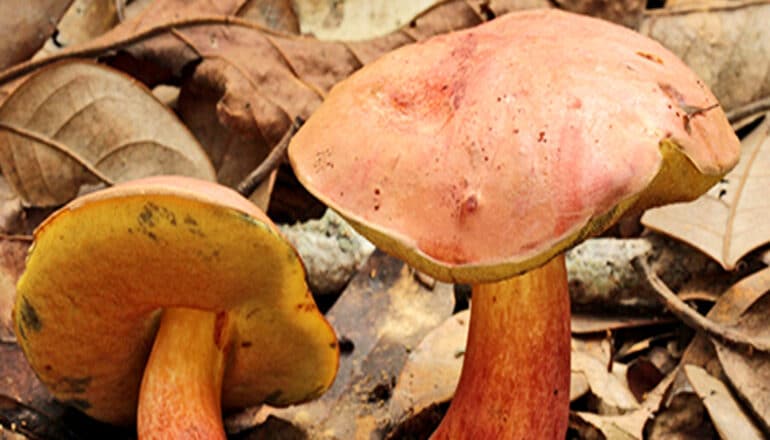
Scientists have identified the mushroom behind “tiny people” hallucinations.
People in communities thousands of miles apart have described the same strange experience after eating a mysterious mushroom: vivid visions of tiny humans moving through and interacting with the physical world around them. Known as Lilliputian hallucinations—a reference to the 6-inch-tall inhabitants of Gulliver’s Travels—the phenomenon has long been thought to stem from cultural influences rather than biology.
A new study suggests otherwise.
Using DNA sequencing, University of Utah (U) researchers confirmed that a single mushroom species, Lanmaoa asiatica, is responsible for these hallucinations in Southwest China and the northern Philippines. They also discovered that the mushroom contains none of the psychoactive compounds known to science, including psilocybin.
Instead, the findings point to an entirely new hallucinogenic compound that could offer new insights into neurological disease and how the brain shapes perception and consciousness.
Colin Domnauer, a doctoral student at the U, and Bryn Dentinger, a mycologist at the U and the Natural History Museum of Utah, coauthored the study that appears in the journal Mycologia.
Here, Domnauer speaks about the Lilliputian mushroom, the decades-long mystery behind it, and the implications of a new hallucinogenic compound:
The post This mushroom is behind ‘tiny people’ hallucinations appeared first on Futurity.



 Bengali (Bangladesh) ·
  English (United States) ·