

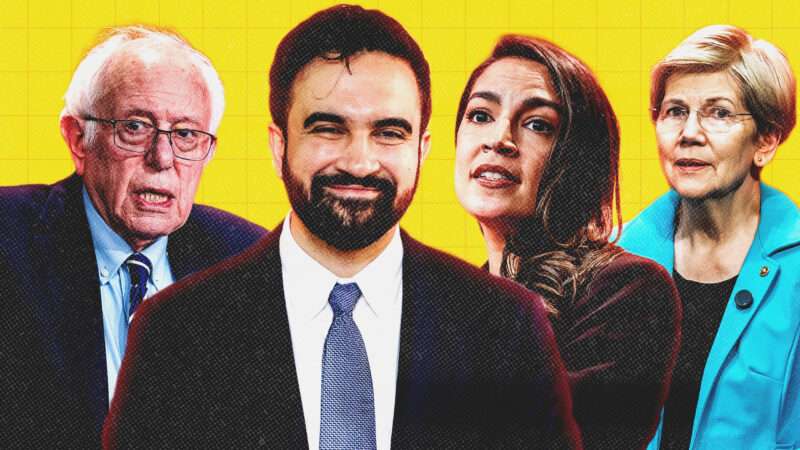
Our politics have been analogized to Veep. A more apt comparison some days is that we are living in a cartoon. Every good cartoon needs a supervillain or three. Our supervillains created millions of jobs, made goods cheaper and far easier to obtain, and revolutionized access to information, among other terrible, terrible things.
I am referring to billionaires. Reasonable people will debate, and disagree on, the best way to sketch out the tax code. Protestations to "tax the rich" have long been central to progressive politics. But last week's Met Gala was a reminder that there is something else undergirding those calls: what seems like legitimate hatred or, at a minimum, disgust. Why?
The Met Gala, of course, is a convenient backdrop for this kind of criticism: a ludicrous event where many of the ultrarich gather together, hobnob in opulent costume, and, at least in one case, protest their own existence. This year, however, was even more convenient, because the gala was sponsored by our main cartoon villain: Jeff Bezos.
"If Jeff Bezos can drop $10 million to sponsor the Met Gala, he can afford to pay his fair share in taxes," said Sen. Elizabeth Warren (D–Mass.) in one of the more civil criticisms offered. Sen. Bernie Sanders (I–Vt.) was more pointed:
The reality of American life today: Jeff Bezos, worth $290 billion, spent:
$10 million on the Met Gala
$120 million on a penthouse
$500 million on a yacht
Meanwhile, he's planning to throw 600,000 Amazon workers out on the streets and replace them with robots.
Unacceptable.
— Sen. Bernie Sanders (@SenSanders) May 5, 2026
Rep. Alexandria Ocasio-Cortez (D–N.Y.) went on to tell comedian Ilana Glazer, worth quite a bit of money herself, that it is simply not possible to earn a billion dollars. "You can get market power, you can break rules, you can abuse labor laws, you can pay people less than what they're worth," she said, "but you can't earn that."
The common theme here is that Bezos et al. are, in effect, not just subject to an unfair tax rate. It is that they are evil. He is not paying his "fair share," he is throwing people out onto the streets, he and others must have abused the law.
Reason's Christian Britschgi explained last week why this general outlook betrays economic reality. But it's also important to interrogate the basic idea that someone is evil because he is rich, which has become common wisdom in certain circles. There are certainly wealthy people who are rotten. Making a product that others want, though, does not make someone a bad egg. Amazon, founded by Bezos, allows people to get items much quicker and often for considerably less money. As of December of last year, the company employed 1.58 million people. He is our cartoon villain?
There are other examples. Sergey Brin and Larry Page gave the world near-unfettered access to information with Google. Maybe it's even how you found this article. (Thanks.) Steve Jobs effectively put computers in our pockets, facilitating more intimate communication and connection with friends and loved ones near and far. Elon Musk, for all of his controversy, helped pioneer the modern electric vehicle and is investing in technology to help people with neural issues regain function. Why is this never a part of the story?
This ire is not constrained to the yearly Met Gala. Perhaps nothing captures it better than a video New York Mayor Zohran Mamdani filmed last month, standing on the street, sneering while he informed constituents that "today, we're taxing the rich." The proposal: a pied-á-terre tax on luxury units whose owners do not live full-time in the city. Why sneering? Because Mamdani was outside of one such unit. He pointed upward at the penthouse and named and shamed its owner, Ken Griffin. Perhaps there is a conversation to be had about an additional tax on high-end, part-time residences. A government leader expressing such revulsion for a constituent is another thing entirely. One of the two men has a lot of audacity, and it is not the private citizen.
Griffin, after all, is a major contributor to the New York economy, though he has reportedly begun scaling back in response to the video. He is also a major philanthropist, having given away billions of dollars. Bezos, meanwhile, recently gave a $100 million donation to a charity funding early childhood education in New York. Will Bernie Sanders add that to his list of Bezos expenditures?
The post These Politicians Want To Tax the Rich. But Why Do They Seem To Despise Them? appeared first on Reason.com.





 Bengali (Bangladesh) ·
  English (United States) ·