
 8 hours ago
7
8 hours ago
7 
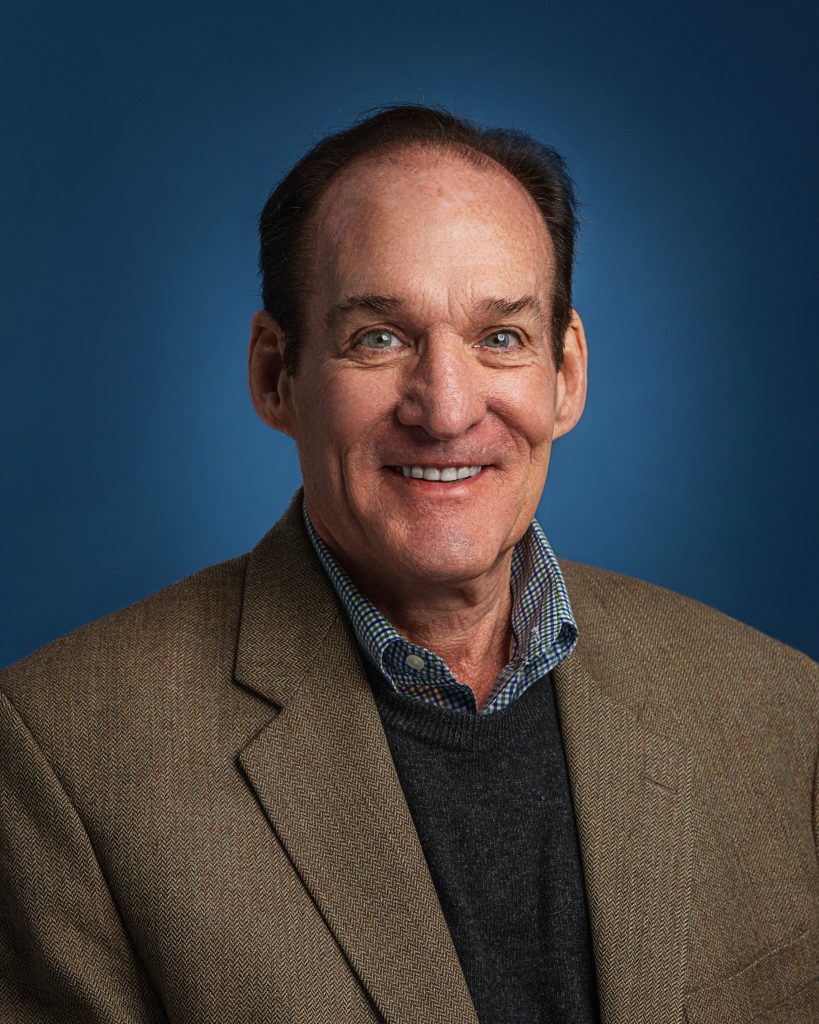
By STEVEN GOODMAN
The future of rural healthcare won’t be determined by how much money is invested. It will be determined by how wisely that money is used.
That line gets nodded along to at every rural health conference, then quietly ignored the moment the conversation turns to solutions, because the solutions on offer are almost always capital solutions: build a wing, buy a scanner, recruit a specialist who will not, in fact, be recruited. I spent a career building infrastructure for GE Medical Systems, standing up systems for remote patient monitoring before “telehealth” was a word anyone used. The lesson that career taught me is one rural health policy still hasn’t absorbed: the expertise a small hospital needs is usually not missing. It’s just licensed in the wrong state.
The Equipment Isn’t the Bottleneck
Consider radiology, because it’s the clearest version of the problem. A critical access hospital in rural Wisconsin can afford a CT scanner. What it cannot afford, and cannot realistically recruit, is a subspecialist radiologist sitting in the building waiting to read scans that come in one or two at a time. That expertise exists — in large quantities, at hospitals and reading services in Chicago, Minneapolis, or Milwaukee, often sitting idle overnight.
The technology to connect the two has existed for two decades. A scan can move from a rural imaging suite to a subspecialist’s screen in seconds. What can’t move nearly as fast is the paperwork — and there’s more of it than most people outside a hospital credentialing office realize.
A radiologist licensed to practice in Illinois cannot legally read a scan for a patient in rural Wisconsin without a separate license, a separate credentialing process, and — even after clearing both — a payer-enrollment process that may not be worth the trouble.
Multiply that by every specialty a rural hospital can’t staff, and by every state line a patient’s data has to cross, and you get the actual shape of the rural healthcare gap. It isn’t a hospital-building problem. It’s a jurisdiction problem.
Three Fixes, None of Which Require a Capital Campaign
Fixing licensing and reimbursement rules would do more for rural healthcare than another round of capital funding
The first fix is licensing reciprocity. The Interstate Medical Licensure Compact has made real progress — most states now participate, and the process is faster than it used to be. But “faster” isn’t the same as “solved.” A specialist who wants to read for a dozen rural hospitals across a dozen states can now apply through a single Compact application, but still ends up holding a dozen separate licenses, paying a dozen state fees, and tracking a dozen renewal dates. For an individual physician deciding whether to take on rural coverage as a side practice, that friction is often the deciding factor, and it decides against.
The second fix is credentialing, and it’s the one hospitals are most likely to overlook, because it sounds like an internal formality rather than a policy problem. It isn’t. Even after a radiologist clears licensing, Medicare’s Conditions of Participation still require the rural hospital’s own medical staff to independently verify that physician’s training, work history, and competence before granting privileges — a process that can take months and is functionally identical whether the physician is joining the medical staff full-time or reading a handful of scans a week from three states away. CMS created a fix for this back in 2011: “credentialing by proxy,” which lets a rural hospital rely on the credentialing already done by an accredited distant-site hospital or telemedicine group instead of repeating it from scratch. The catch is that it’s optional. A hospital’s governing board has to choose to adopt it, negotiate the written agreement, and update medical staff bylaws to allow it — and plenty of rural hospitals, already short-staffed, never get around to it. The result is a rule that could eliminate months of delay sitting on the books largely unused.
The third fix is payment and enrollment, and it’s the least glamorous of the three, which is probably why it gets the least attention. Medicare, to its credit, doesn’t treat a remote read as telehealth; it pays for the interpretation much as it would an in-person one. The friction is in the plumbing. A radiologist has to enroll with Medicare based on where they physically sit while reading, even if that’s a home office, and every new reading location or billing arrangement is another enrollment to manage. Some state Medicaid programs won’t pay out-of-state radiologists for remote reads at all, which for a rural hospital, where Medicaid often covers a large share of patients, can be enough to sink the arrangement. Commercial insurers each set their own rules on top of that. Those rules were written for a world where care was inseparable from geography. That world is gone in every other part of the economy. In healthcare, the rules haven’t caught up, and every year they don’t, they quietly make remote specialty coverage a worse business decision than it needs to be.
Fix all three, and the staffing model for a rural hospital changes completely. It no longer needs to recruit and retain a subspecialist it will likely never successfully hire, wait months for its own medical staff office to independently verify a physician it will never meet in person, or lose payment for care because it arrived over a network connection from across a state line instead of from down the hall. It needs a technician trained to operate the equipment, a credentialing agreement it actually adopts, and payment rules that make providing the service worth someone’s time. That’s a realistic ask. Recruiting a full-time rural radiologist, in a national shortage that leaves even large urban systems struggling to fill radiology positions, is not.
Not Charity — A Business Case
This isn’t only a rural hospital’s problem, and treating it that way undersells the case for fixing it. Urban academic medical centers and large health systems already run radiology departments with unused overnight and off-peak reading capacity — coverage they’ve built and staffed regardless of whether a rural hospital’s scan lands on the worklist. Extending that capacity to a rural affiliate is close to pure margin: the capacity already exists, and the incremental cost of one more read is low. The more durable benefit runs downstream. A rural patient whose scan surfaces something serious — a mass that needs oncology, a valve that needs a cardiac surgeon — becomes a referral to whichever system read the scan. For an urban system’s outreach strategy, remote radiology isn’t a favor to rural hospitals. It’s a growth channel that happens to also be the right thing to do.
That distinction matters for how this gets built. A wave of commercial teleradiology staffing companies already exists to solve the coverage half of this problem — pooled radiologists, contracted by the read, available around the clock — and they’ve kept plenty of critical access hospitals staffed overnight who otherwise wouldn’t have been. But a pure staffing vendor has no stake in the rural hospital beyond the individual read. There’s no referral relationship to protect, no shared reputation on the line, and no particular reason to prioritize the hospital’s actual case mix over whichever study on the shared worklist pays the vendor’s radiologists the most. A hospital-to-hospital arrangement has skin in the game on both ends: the urban system wants the rural hospital’s trust and its referrals; the rural hospital wants a partner it can hold accountable, not a rotating cast of contracted readers. If licensing, credentialing, and reimbursement get fixed, they should be fixed in a way that makes it easier for hospitals to build these relationships directly with each other — not just easier for staffing vendors to scale.
“Wisely Used” Is a Policy Choice, Not a Spending Level
None of this requires a new grant program. It requires state legislatures and reimbursement bodies to treat licensing and payment rules as the infrastructure they actually are — as consequential to whether a rural patient gets a timely radiology read as the scanner itself. That’s a cheaper fix than it sounds, and a more durable one, because it doesn’t depend on any single hospital’s ability to win a grant or recruit a specialist against the odds. It changes the odds for every rural hospital at once.
Money will always be part of the rural healthcare conversation, and it should be. But the quote at the top of this piece has it right: it’s not the only variable, and in this case, it may not even be the binding one. The expertise rural patients need already exists. The question is whether we’re willing to let it cross a state line.
Steven Goodman is Senior Director of Technology at Marquette University’s Klingler College of Arts and Sciences and a former Chief Technology Architect at GE Medical Systems.





 Bengali (Bangladesh) ·
  English (United States) ·