

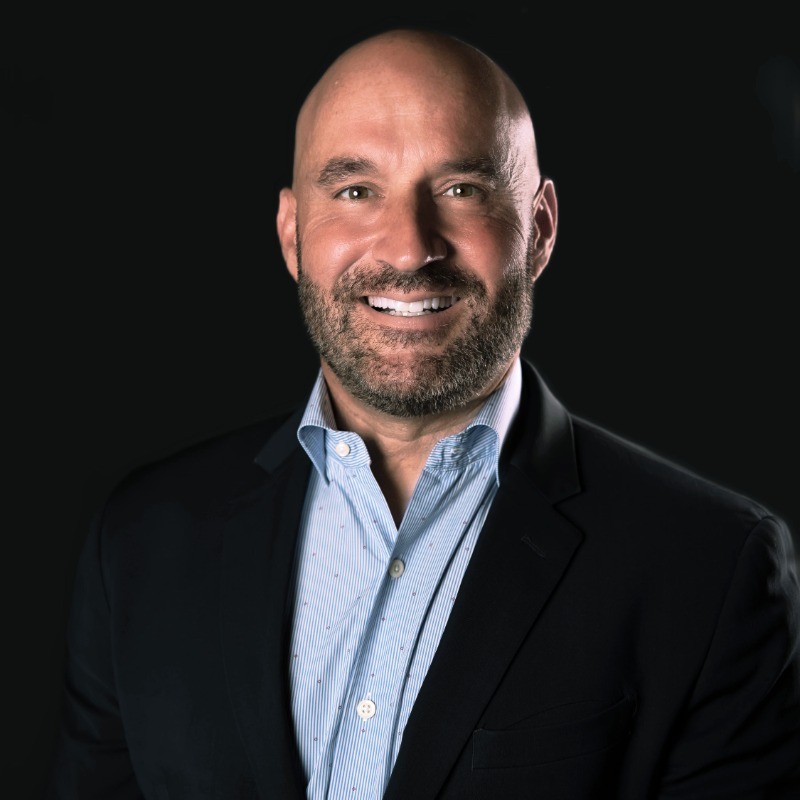
 Chris Cato, DC, Chief Population Health Officer at Airrosti
For years, clinicians have complained about the same thing: they became doctors to care for patients, not to stare at screens.
The electronic health record inserted a keyboard into the most important relationship in medicine. Now, for the first time in decades, artificial intelligence (AI) is beginning to remove it. Ambient listening technology is giving providers back the focused attention that documentation demands have quietly eroded. That is not a minor workflow improvement. It is a restoration of something fundamental to good care.
And yet, the most important question in healthcare AI right now is not what it is fixing. It is what it’s not fixing, and whether the industry has the discipline to tell the difference. Improving the experience of care delivery is not the same as improving the outcomes of care itself. In a healthcare economy where employers and health plans are ultimately evaluated on total cost and clinical results, conflating the two carries real consequences.
Acceleration Is Not the Same as Improvement
AI excels at the mechanics of healthcare delivery. It increases speed, sharpens triage, automates clinical documentation, and surfaces patterns humans might miss. It improves access and reduces administrative overhead in ways the system has needed for years. None of that is trivial.
But the critical question is not whether AI makes healthcare faster. It is whether AI improves resolution, modifies disease trajectories, produces outcomes that are durable rather than temporary, and reduces total cost of care over time. Those questions remain largely unanswered, and the industry’s enthusiasm for AI’s operational gains has made it easier to avoid asking them. Until AI is embedded within models that are accountable for durable outcomes, it will improve workflow more reliably than it will improve health.
What MSK Reveals About the Resolution Gap
Musculoskeletal (MSK) care offers a revealing case study. MSK is one of the largest cost drivers in employer-sponsored health plans, accounting for roughly 17 cents of every healthcare dollar, and it has become one of the most active categories for AI-enabled digital health investment. It is also a space where the gap between what a platform measures and what an employer actually needs has become unusually visible.
Many digital MSK platforms track logins, exercise completion, range of motion, chat engagement, and app adherence, and by digital health standards the engagement data can look compelling. But employers and health plans are not purchasing engagement. They are evaluating episode duration, imaging avoidance, surgery deflection, downstream utilization, and total cost of care. Between those two sets of metrics, there is a gap that AI-guided digital platforms have not closed.
The reason is biological. MSK dysfunction is frequently physical and structurally driven, and when tissue is compromised, behavioral guidance alone cannot correct the underlying problem, however intelligent or personalized that guidance may be. AI can shape behavior. It cannot perform the corrective intervention that compromised tissue actually requires. When the required mechanism is physical, a digital-first model will optimize engagement while condition driving cost continues unresolved.
Engagement is not resolution.
And the two do not automatically converge.
The Risk of Scaling Partial Care
OpenAI, Google, Microsoft, and a growing field of digital health companies are deploying AI copilots, clinical decision support tools, generative intake systems, and risk stratification platforms across the care continuum. These capabilities genuinely improve access. They reduce the friction of entering the healthcare system and support clinical workflows in ways that providers benefit from.
But access without accountability for what happens downstream does not solve the cost problem. It accelerates the referral cycle. When AI optimizes the front end of care without improving resolution at the point of intervention, the underlying driver of cost remains untouched. Amplification without resolution does not improve care. It scales partial care, and partial care delivered at greater speed and volume does not become less partial.
Digital-First Models Optimize Engagement. Resolution-First Models Optimize Outcomes.
MSK is high volume, high cost, highly variable, and historically resistant to durable resolution. In that sense, it is not an exception to the broader healthcare AI story, but a clarifying lens for it. The same dynamic that produces an engagement gap in digital MSK applies across condition categories where the required clinical mechanism cannot be delivered through a screen.
Digital-first models are optimized for reach, scalability, and consistent delivery of guidance and education. In the right context, they support better outcomes. But when MSK dysfunction requires clinical intervention, durable improvement demands more than guided exercise and behavioral nudges. It requires a clinician who is accountable for functional restoration. Resolution-first care models are built around that accountability, with digital tools supporting the delivery of outcomes rather than substituting the clinical work that produces them. Employers evaluating MSK vendors are increasingly in a position to see that distinction clearly.
The Next Breakthrough Will Not Be AI-First
AI is entering care delivery with enormous promise, and the early gains in workflow efficiency, clinical documentation, and provider experience are real. Better technology matters. But better technology does not automatically produce better outcomes. Outcomes are driven by accountability to resolution, and that is something no platform delivers on its own.
That is a meaningful start. The next breakthrough in healthcare will not be AI-first. It will be outcome-accountable and supported by AI. Care models rebuilt around accountability for resolution, with AI supporting the delivery of those outcomes throughout, represent a genuine clinical advance. AI deployed as a layer on top of models that were never accountable for outcomes will accelerate whatever those models already produce, including their limitations.
The breakthrough healthcare is waiting for will not be measured in app downloads, engagement scores, or AI adoption rates.
It will be measured in something far simpler: whether patients actually recover, and whether the total cost of care finally begins to fall.
About Chris Cato, DC
Chris Cato, DC, is Chief Population Health Officer at Airrosti, where he leads national strategy and partnerships with employers, health plans, health systems, and ACOs to advance value-based musculoskeletal care. With more than 28 years of healthcare experience, he focuses on scaling clinically proven models that improve outcomes, reduce total cost of care, and reshape how organizations approach muscle and joint health. Chris is a recognized thought leader in employer-sponsored MSK strategy and population health innovation, frequently contributing insights on care navigation, resolution-focused treatment, and the future of value-driven healthcare.





 Bengali (Bangladesh) ·
  English (United States) ·