

Khushi Karthikeyan, 18, has been fascinated by black holes since childhood. “Part of that fascination lies in the mystery,” Khushi says. “We don’t know so much about them.” One of the biggest open questions: How did those supermassive ones at the centers of galaxies get so enormous? Khushi’s research might bring scientists one clue closer to solving that mystery.
 Khushi Karthikeyan ran computer models to investigate the origins of “intermediate mass” black holes. These cosmic objects could have been the building blocks for the beastly supermassive black holes now found at the cores of galaxies.Society for Science
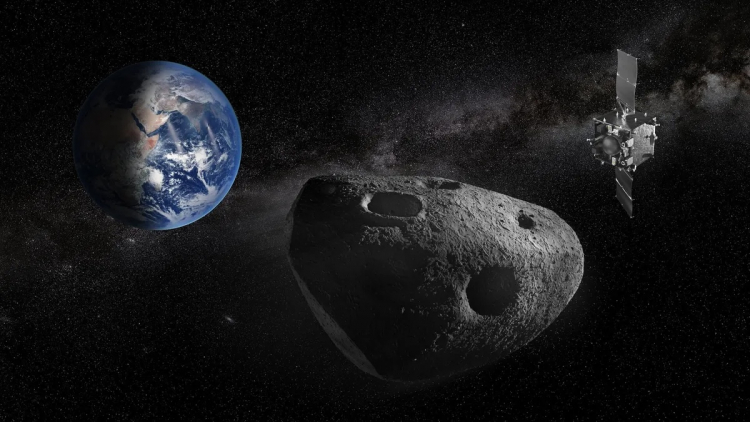
Supermassive black holes at the hearts of galaxies are truly monstrous. They can be millions to billions of times more massive than the sun. They shape how their home galaxies behave and evolve. Scientists think these beasts formed through collisions between smaller, “intermediate mass” black holes. But if so, how did such intermediate mass black holes form — those 100 to 100,000 times the mass of the sun?
To find out, Khushi ran computer models of huge stars in the early universe. Such stars had 200 times the mass of the sun and were low in elements heavier than hydrogen and helium. These models showed that those stars could indeed collapse, at the ends of their lives, into intermediate mass black holes. This hints that perhaps the origins of today’s supermassive black holes could trace back to such huge ancient stars.
Khushi is currently a high school senior at Ardsley High School in Ardsley, N.Y. Their research earned them a finalist spot at the 2026 Regeneron Science Talent Search. (That competition is run by Society for Science, which also publishes Science News Explores.) In this interview, Khushi shares their research experiences and advice.
What was your favorite part of this project?
“One of my favorite parts was that I was actually able to make my own contributions toward the field that has so long fascinated me,” says Khushi. They have loved learning from black hole research. “Now, I can kind of give back to it.”
What was the most challenging part?
Khushi struggled at first to get their data because the complex star models had taken so long to run. “I got back one simulation after it had been running for a few days. It was complete garbage. There were squiggles all over the place on the graphs,” Khushi says. They would have to run much more detailed models to get good results. And that would take weeks.
“There were these two weeks of excruciatingly waiting for my data,” Khushi says. “Luckily, there were people in my life who helped encourage me [and] helped me not lose hope.”
What were your most important resources?
Explainer: What is a mentor?
“My mentors,” Khushi says. “I would not have been able to do it without them.” Khushi found their research mentors by emailing dozens of scientists. “My [main] mentor was one of the few people who actually responded,” Khushi says. “The person who gets back to you will be the right person for you.” If at first you struggle to find a mentor, they say, “don’t lose hope.”
Any other advice for research newbies?
“Start small,” Khushi says. “You’re not trying to cure cancer on your first project. The goal is to make your own contribution to the field [you care about]. You don’t need to try something way too enormous, because if you do that, you’re likely going to be faced with disappointment. … If it’s achievable and you’re passionate about it, you will go far.”


 Bengali (Bangladesh) ·
  English (United States) ·