

On Thursday evening the US Treasury's Financial Crimes Enforcement Network, FinCEN, declared MEXC Global a "primary money laundering concern" and ordered every US financial institution to stop processing funds transfers involving the exchange. If you hold funds on MEXC from Germany, Austria, Switzerland or anywhere else in Europe, here is what the order does and does not mean for you, and a sensible way to act on it.
What did FinCEN actually do to MEXC?
The order, issued under Section 9714 of the Combating Russian Money Laundering Act, finds that MEXC processed at least 16 billion dollars connected to illicit activity between May 2021 and May 2026. That includes close to 1.5 billion dollars tied to Russian sanctions evasion, 232 million dollars in direct transactions with sanctioned entities, and roughly 2 billion dollars linked to cybercrime actors, including North Korean and Iranian networks. FinCEN calls MEXC's compliance programme "severely deficient" despite its public bans on users from Iran and North Korea.
Two details matter. First, this is a FinCEN special measure, not an OFAC sanction: MEXC is not on a global blacklist, and holding an account there is not illegal. Second, the ban takes effect 30 days after publication in the Federal Register, so there is a short window before US dollar rails are formally closed. MEXC, headquartered in the Seychelles, serves users in more than 170 countries, processed over a billion dollars a day and held around 5 billion dollars in reserves as of June. It has not publicly responded.
Are European MEXC users affected?
Not directly, but materially. The order binds US financial institutions, not European ones, and no European regulator has acted. In practice, though, an exchange cut off from US dollar banking faces three problems that reach every customer: thinner liquidity as market makers pull back, pressure on stablecoin issuers such as Tether and Circle to freeze exchange-linked addresses, and a reputational hit that tends to trigger withdrawal queues. MEXC also holds no MiCA authorisation that we are aware of, which means EU users were already trading without the protections that apply to licensed providers.
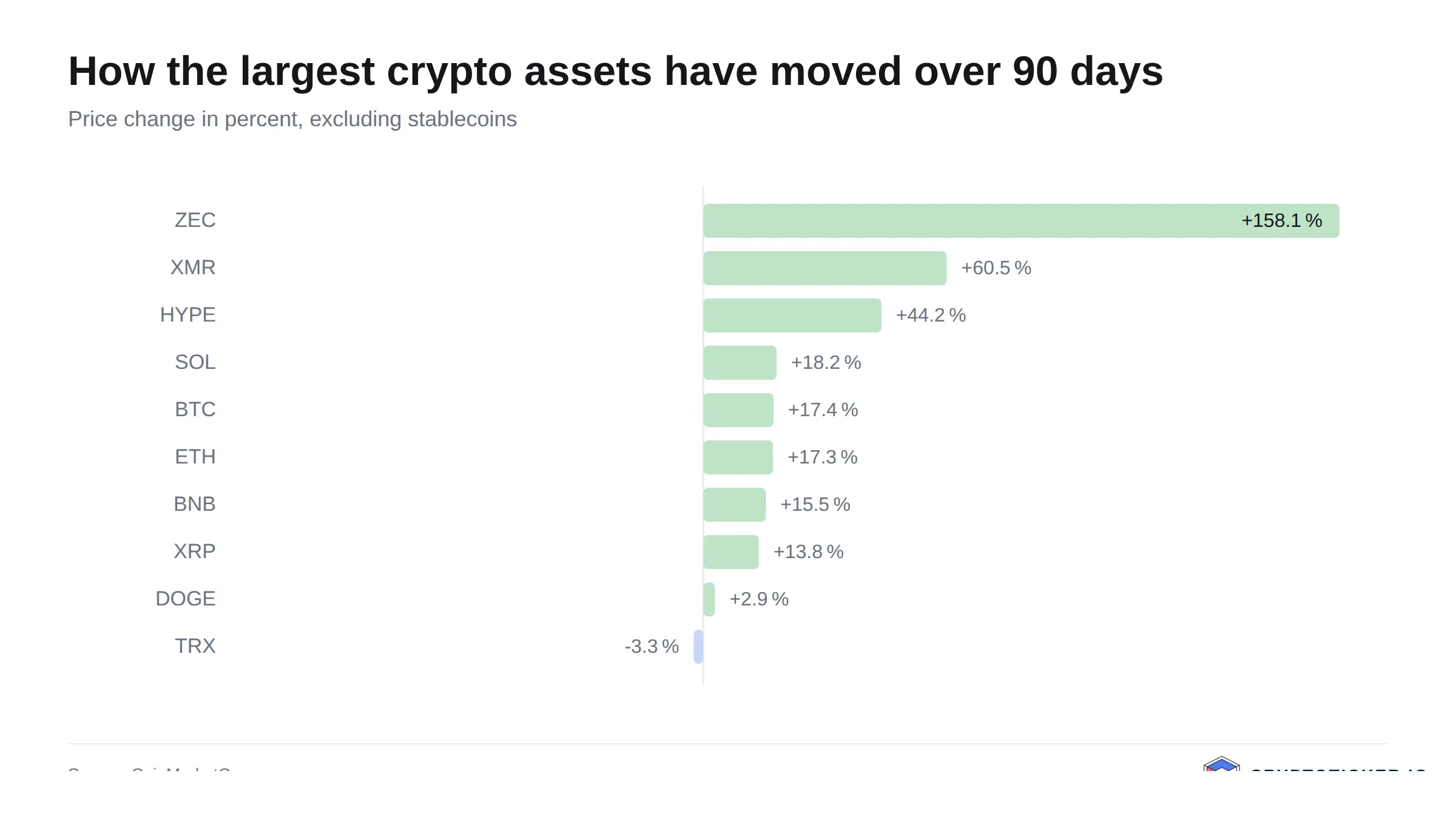 The largest crypto assets compared over 90 days, according to CoinMarketCap data
Can you still withdraw from MEXC?
As of this writing, yes. Withdrawals are functioning and nothing in the order forces MEXC to halt them. The risk is not today; it is what happens if volumes drop, banking partners leave and the exchange has to manage a liquidity crunch. The history of offshore exchanges after enforcement actions is not kind: the orderly exits happen early.
What should you do now if you have funds on MEXC?
Act calmly, in this order.
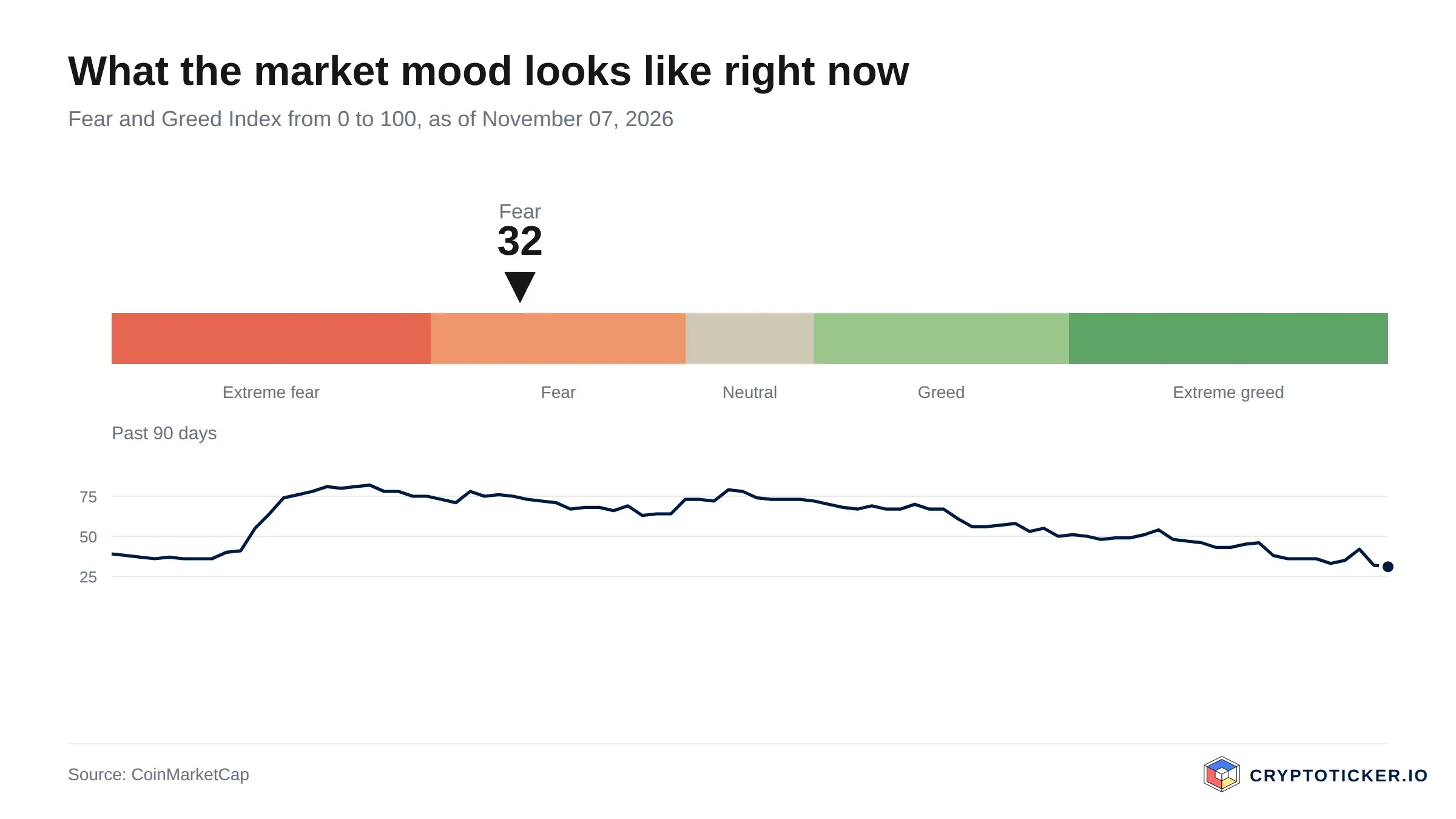 The Fear and Greed Index places market sentiment between extreme fear and extreme greed
Withdraw to self-custody first. Move coins to a hardware wallet or a wallet you control. Test with a small amount, then move the rest.
Handle stablecoins carefully. If you hold USDT or USDC on MEXC, consider converting to an asset less likely to be frozen at the issuer level, or withdraw to your own wallet immediately rather than leaving them on the platform.
Close leveraged positions. Funding, liquidity and spreads deteriorate fast on an exchange under pressure. Open futures positions are the first thing to get hurt.
Export your history. Download your full trade and transfer history now for tax purposes. Exchanges in distress do not always keep their APIs online.
Choose a regulated venue for future trading. For European users, a MiCA-licensed exchange such as Bitpanda, or a regulated broker such as XTB for CFD exposure, removes the counterparty uncertainty that comes with offshore platforms.
Is this the end for MEXC?
Not necessarily, but the precedent is hard to ignore. FinCEN's "Operation Economic Outcast" is designed to target crypto platforms it considers Russia-linked, and MEXC is its highest-profile case so far. The exchange can try to restructure compliance, restrict US-dollar flows and keep operating for non-US customers. What it cannot do is undo the risk premium. For a European trader, the question is simple: is the extra liquidity worth the extra exposure? For most retail users, the answer this week is no.
Need a wallet? The CryptoTicker shop lists hardware wallets and everything else crypto.



 Bengali (Bangladesh) ·
 English (United States) ·