

Imagine a situation that makes your heart race. Maybe it’s sitting down to take a test. Or stepping on stage to perform in a recital. Or working up the nerve to talk to your crush.
Such stressful situations can send the hormone adrenaline coursing through your veins. This chemical plays a key role in your body’s fight-or-flight response, which prepares you to face down danger.
When your brain perceives a threat, it sends a distress signal to the adrenal glands near your kidneys. That chemical messenger spurs the glands to release adrenaline. This hormone is also known as epinephrine.
See all the entries from our Let’s Learn About series
Adrenaline then races through your bloodstream to reach other organs. It makes your heart beat faster to supply blood to the muscles. It also makes you breathe faster, getting more oxygen to your brain and boosting alertness. Adrenaline even slows down digestion. That saves resources for more urgently needed organs.
This emergency response system evolved to help us react quickly to life-threatening dangers. But everyday stressors can trigger adrenaline rushes, too. So can intense experiences that aren’t necessarily bad — like watching a scary movie or falling in love.
Sometimes, a surge of adrenaline is just what we need to lock in and perform well under pressure. But other times, a racing heart, shortness of breath and sweaty palms makes it hard to face our fears. And too much adrenaline over a long period of time can damage the heart and other tissues.
To help your body calm down when it’s braced for danger, try taking deep breaths. You can also try going for a walk or talking to a friend or family member.
Adrenaline as medicine
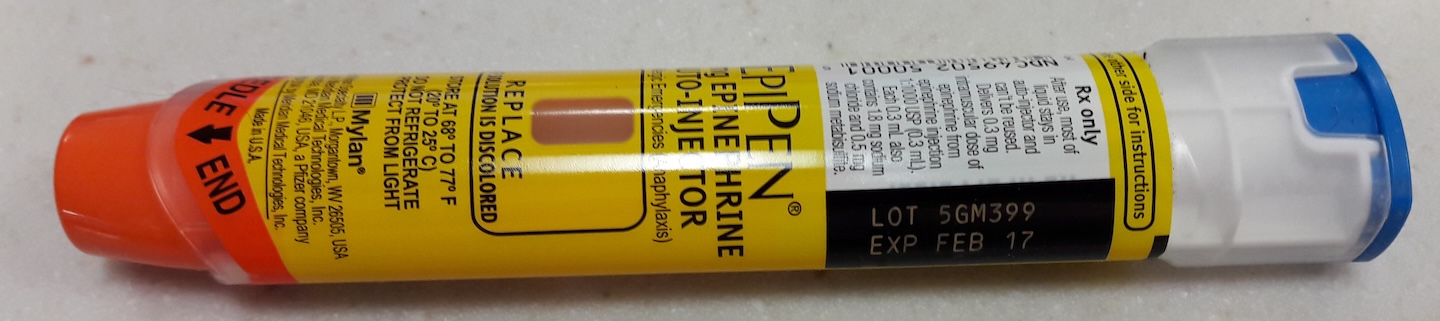 Tokyogirl79/Wikimedia Commons (CC BY-SA 4.0)
Adrenaline, or epinephrine, is not just a natural hormone. It’s a lifesaving medication. Injected with a device such as an EpiPen (pictured), epinephrine can open the airways of someone having a severe allergic reaction. Epinephrine can similarly help someone having an asthma attack or kickstart the heart of someone experiencing cardiac arrest.
Want to know more? We’ve got some stories to get you started:
Puberty may reboot the brain and behaviors Facing adversity early in life can hurt how children learn to deal with stress. Puberty can sometimes offer a chance to reset how the body responds to stress, returning it to normal. (8/27/2020) Readability: 7.8
What’s the fun in fear? Science explores the appeal of scary movies One reason that some people might enjoy watching horror movies is the pleasure of an adrenaline rush. (10/27/2022) Readability: 6.8
Heart risks seen in regular vapers One study found evidence that people who regularly vape have higher levels of the hormone adrenaline. This could raise vapers’ risk of heart disease. (2/8/2017) Readability: 8.4
Adrenaline rushes aren’t the only effects that roller coasters can produce in the body.Explore more
Explainer: How our body deals with stress
Are you scared of heights? Virtual reality could help
Too much noise can harm far more than our ears
Activities
An adrenaline rush can affect your breathing rate, heart rate and even pain tolerance. Can you see these effects when playing an exciting video game? Grab a few friends and try this science experiment from Education.com.




 Bengali (Bangladesh) ·
  English (United States) ·