
 1 hour ago
14
1 hour ago
14 
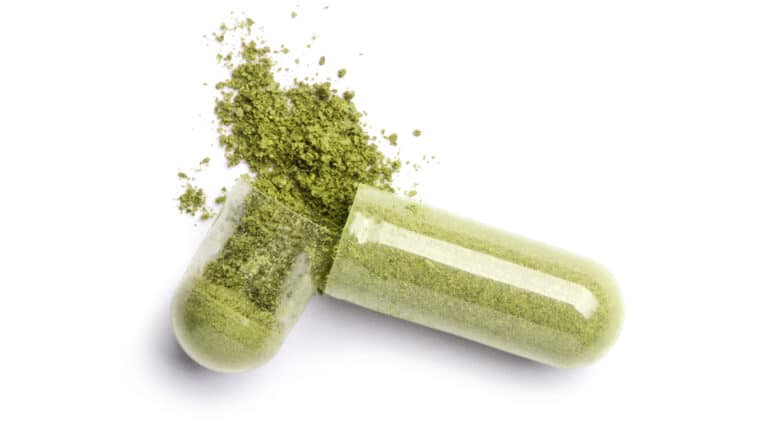
A national study of kratom use in the US found rising popularity among young adults, and it is linked to addiction and mental health issues, according to new research.
This is the first known national study to examine the use patterns of kratom and its association with mental health and addiction, the researchers say.
Kratom is a plant from southeast Asia that’s sold online and in some stores in powders, liquid shots, pills, and teas. Opponents of kratom argue that it is addictive and widely available to children, while proponents say it is a safe, natural alternative for managing a host of ailments.
Given the changing policy landscape involving kratom in the US, it was an important time to conduct a national study with recent data to examine how many people—including children—use kratom, and its associations with mental health and substance use disorder, says Sean Esteban McCabe, a professor in the University of Michigan School of Nursing, and principal investigator.
The study appears in the Journal of Addiction Medicine.
Takeaways:
More than 5 million people in the US say they have used kratom in their lifetime, including more than 100,000 children ages 12-17. Kratom use is at an all-time high and is increasing in the US, which is particularly notable given that about half of US states ban or regulate kratom. Most people who have used or currently use kratom have a substance use disorder, report cannabis use, and many have serious psychological distress and major depression. The findings reinforce that policy action is warranted to limit access to kratom by children and that better addiction and mental health treatment is needed.The US Food and Drug Administration has not approved kratom for any medical use, and federal agencies have warned about potential risks, including addiction and serious side effects. The US Drug Enforcement Administration has also flagged kratom as a drug or chemical of concern, says McCabe, who is also the director of the Center for the Study of Drugs, Alcohol, Smoking and Health, or DASH.
Products like 7-OH, or 7-hydroxymitragynine—a synthetic derivative of the kratom plant—are often sold in gas stations, smoke shops, and online in tablets, gummies, and drinks—can be five to 50 times more potent than regular kratom. It is sometimes marketed as legal morphine.
The researchers emphasized that the study does not prove kratom—whose main psychoactive chemical, mitragynine, comes from the plant’s leaves and stems—causes addiction or mental health problems. Because the survey captures a only a snapshot in time, it cannot determine which came first: kratom use or the mental health symptoms.
While the study examined mental health issues, a striking secondary finding was the increase in use, McCabe says. The share of Americans ages 12 and older who says they had ever used kratom rose from 1.6% in 2021 to 1.9% in 2024.
Adults ages 21-34 reported the highest use: About 3.4% says they had used kratom at least once, and about 1% says they used it in the past year.
“Policy changes regarding kratom and 7-OH products are needed in all states if we are serious about protecting our children,” McCabe says. “Five million people is more than the entire population of the six smallest states in the US combined—Wyoming, Vermont, Alaska, South Dakota, North Dakota, and Delaware.”
Kratom use is likely under-reported in clinical settings because it does not show up on standard drug tests and requires specialized testing, McCabe says. At the same time, rules about kratom vary widely across the US—some states regulate it, while others do not—which can complicate public health and policy decisions, he says.
The study analyzed data from the National Survey on Drug Use and Health collected from US households from 2021 to 2024.
Additional coauthors are from UM Medical School, DASH, Rush University, and Texas State University.
Support for the study came from the National Institute on Drug Abuse of the National Institutes of Health.
Source: University of Michigan
The post Kratom use is on the rise in the US appeared first on Futurity.





 Bengali (Bangladesh) ·
  English (United States) ·