

Ezra Klein and Derek Thompson's Abundance was one of the most talked about policy books of 2025. In broad strokes, the book makes the case for "a liberalism that builds" and thus becomes the basis for a more affordable and more sustainable--or, they would say, abundant--future.
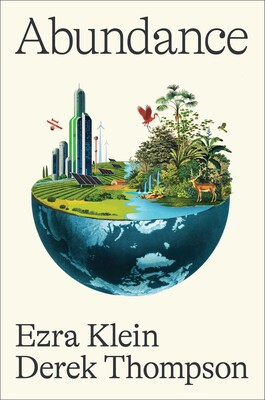
Much of the book provides a useful diagnosis of how existing policies and regulations amke it too difficult to build hosing, deploy clean energy, develop innovative technologies, and bring innovations to market. In this respect, it is a useful intervention in policy debates that challenges the contemporary approach to governance to which many of their ideological compatriots are committed. Yet, as I note in my review in Regulation, the book has its blind spots.
Klein and Thompson recognize that many policies long championed by the left have produced unsustainable and undesirable results. Yet they show little interest in understanding why things went wrong. Their analyses of how regulatory policies make it unnecessarily costly and difficult to deploy clean energy and make housing more expensive and less available are sound, but they also are not new. I have been arguing that current approaches to permitting are particularly problematic for clean energy development for decades. Analyses showing how zoning and rent control choke off housing supply are older still.
The question Klein and Thompson do not try to answer is why so many smart policy wonks on the left--themselves included--denied and rejected arguments for abundance before now. In this respect, I do not think their book (or the discussions of it to which I have listened) show much introspection.
From my review:
Klein and Thompson admit they are discovering problems today that they studiously ignored in the past when flagged by market-oriented analysts. The recognition that progressive legal institutions are obstacles to growth, innovation, and solving societal problems is welcome. Yet they show little curiosity as to why they and their fellow-travelers had so many "blind spots" for so long. Other than a brief nod to Mancur Olson, they offer no real explanation for why well-intentioned laws become obstacles to economic and social progress, nor do they show much willingness to second-guess or revisit their own assumptions about the proper role of government in facilitating economic growth, technological innovation, or material abundance. Klein and Thompson may understand what it takes to build political support for supply-side thinking on the political left, but their lack of introspection renders much of their substantive analysis hollow.
They close the book by offering "a new set of questions around which our politics should revolve. What is scarce that should be abundant? What is difficult to build that should be easy? What inventions do we need that we do not yet have?" A more fundamental inquiry would be who decides? And what sorts of institutional arrangements are necessary to answer such questions? In failing to even pose such questions, Abundance does not offer much of an answer to the problems it seeks to solve. Klein and Thompson say they want a "liberalism that builds," but they never really consider how it was that liberalism once built.
The post Klein and Thompson's Abudance Shows Abundant Lack of Introspection appeared first on Reason.com.





 Bengali (Bangladesh) ·
  English (United States) ·