

You probably know that social media apps try to keep us online as long as possible. But do you know how they do this? They feed us what computer algorithms have determined we seem to want. The problem: This diet tends to be very unhealthy — and have long-lasting side effects.
Explainer: What is an algorithm?
Experts sometimes think of social media feeds like real food. And it hasn’t been nourishing, says Noah Giansiracusa. A mathematician, he works at Bentley University in Waltham, Mass. He also wrote Robin Hood Math: Take Control of the Algorithms That Run Your Life.
Candy, ice cream, chips and other snack foods are tasty. Unfortunately, their calories offer very little in terms of nutrition. Giansiracusa says that what social media algorithms are doing is “the junk food-ification of everything.”
Social media companies analyze our online behavior. And this has shown them what we tend to like. But are flashy, appealing and fun feeds what we want — almost to the exclusion of everything else?
Like eating a junk-food heavy diet, Giansiracusa says that consuming too much social media can have “a lot of unanticipated consequences.”
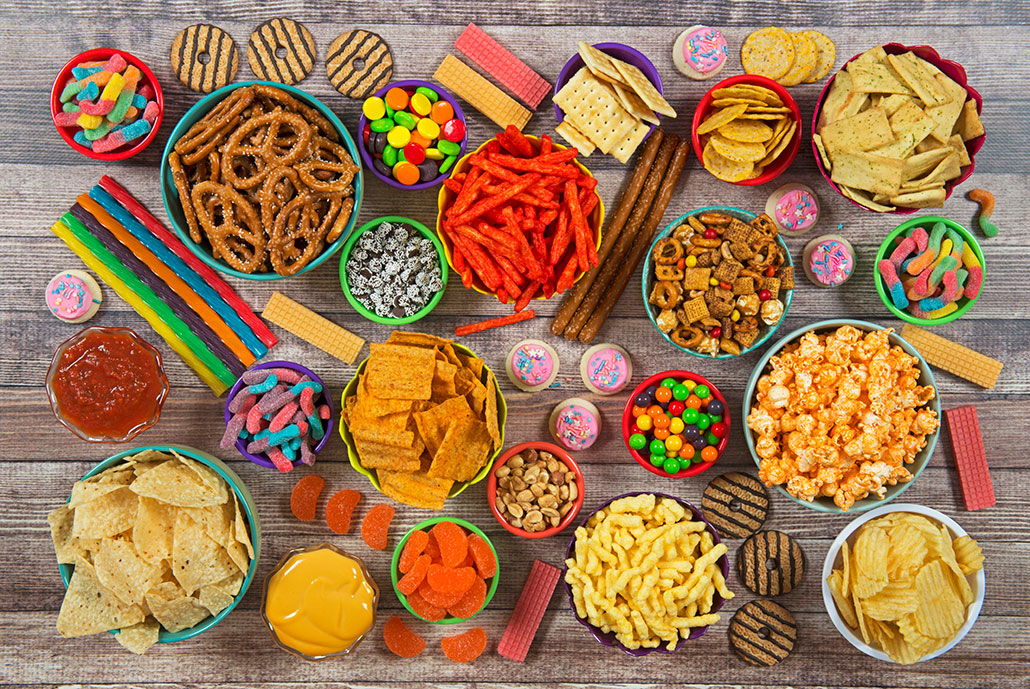 Chips, cookies and other snacks can make a tasty side to an otherwise healthy lunch. But imagine if these were the only choices you had to eat, meal after meal, day after day. Not only might your body rebel, but you’d eventually find that even these treats got boring. Karen M. Romanko/Photodisc/Getty Images Plus
Party time
Imagine that you have a very social friend — Rickie — who throws a potluck dinner every year. He asks every guest to bring a dish. But Rickie doesn’t want those guests to serve themselves. Instead, he makes lists of what he’ll serve to each person.
Each list will be different, tailored to a guest’s likes and dislikes.
To learn what they prefer, Rickie asks each guest questions. Do they like certain types of food or dishes made by specific people? Do they have allergies or hate the textures of certain foods? With such info in hand, Rickie makes a unique plan for each person’s plate.
His parties have been so popular that they now draw hundreds of guests, all bringing different foods. And Rickie’s pleased. But now he can’t find the time to make them each a separate food-plating list.
He makes a compromise: Each guest gets some of whatever they ate last year and some of last year’s most popular and most talked-about dishes.
Rickie’s simple rules for feeding his guests now resemble a social media algorithm. And like social media algorithms, Rickie’s approach can create a lot of surprises.
The trap of what we liked before
Rickie thinks that he’s making guests happy by giving them some of what they ate the prior year. But does this always work? What if your sister packed your lunch every day and always gave you more of what you’d eaten the day before and less of what you hadn’t eaten? Maybe you started out getting a sandwich, a pickle, carrots, an apple, chips and a cookie. But soon your lunch might end up being just chips and cookies. And not just for a day, but for every day thereafter.
This is the same thing that social media algorithms do: feed us more of what we’ve clicked on.
This approach hides a problem, says Myojung Chung. She is an expert in media innovation at Northeastern University in Boston, Mass. Social media algorithms give highest priority to what you’ve already shown interest in. This can quickly get boring.
Moreover, Chung says, it “can limit your exposure to diverse viewpoints.” Your feed can easily get too full of one topic (like cute kitten videos) or posts from only one point of view (one that you agree with). The variety of posts you see quickly shrinks.
Do you have a science question? We can help!
Submit your question here, and we might answer it an upcoming issue of Science News Explores
Popular, but maybe not for you?
Other potluck consequences come from Rickie assuming — as social media apps do — that people will like what’s popular. Even if mostly true, by feeding us so much popular food or content, Rickie and the algorithms can end up shaping our attitudes. How? Chung says many users think that if other people liked a post or shared it, then they should like it, too.
Scientists Say: Confirmation Bias
We users might come to think that such overly represented themes are “the norm,” adds Brahim Zarouali. This may tempt us to “adapt [our] behavior to match that norm.” Zarouali is an expert in persuasive communication and digital media at KU Leuven in Belgium.
“That’s what … social media is about,” Zarouali says. “Trying to show you things that others are also liking, in the hope that you will like it as well.” Soon, each individual’s thoughts and opinions start to look less distinct.
Note that if our feeds are filled with what’s popular, we won’t see unique posts. Seeing posts that are different or rare becomes difficult, says Kyle Chayka. A journalist, he’s the author of Filterworld: How Algorithms Flattened Culture. When algorithms determine what we see, he notes, “the popular becomes more popular, and the obscure becomes even less visible.”
Popular, but not at all true?
Rickie also gives people dishes that were talked about a lot. In the social media world, those would be posts that get a lot of engagement — for instance, clicks, likes and shares.
What prompts all this activity? “Content that is highly engaging,” Zarouali says, “which shocks people or is very emotional.” It often includes ideas or words that are extreme — things that may rile people up.
And what really shocks people or riles them up? False or misleading information, Chung’s research has shown.
It’s easy to amp people up if you use lies. “While true news is limited by reality, false news is only limited by its author’s imagination,” Giansiracusa says. “False news can be as exciting as you want.”
How to resist and counter today’s flood of fake news
No wonder, then, that social media platforms have become a haven for mis- or disinformation. Posts can be fun or drama-inducing, but they don’t have to be the least bit true.
Should you just consume what is in your social media feeds? It’s what you supposedly want, right? And it’s easy: You don’t have to do anything.
Ask yourself the same question about your meals: Would you want to eat just junk food three times a day, every day, month after month? No fresh fruit, no vegetables, no water or milk, no good protein sources — ever?
It’s worth the effort to look outside what your social media feeds are serving you. Try to find a variety of content, not just what you’ve seen before or what everyone else is looking at. It’s better for your mental health, just like eating a variety of foods is better for your physical health.


 Bengali (Bangladesh) ·
  English (United States) ·