
 10 hours ago
3
10 hours ago
3 
When Vigdis Hjorth’s novel Will and Testament was published in Norway in 2016, scandal erupted in its wake. In that novel, a character who resembles Hjorth recounts her struggles to communicate with her family after she tells them that her father sexually abused her as a child. In real life, Hjorth’s family protested that her allegations weren’t true, while Hjorth pointed out that the novel was, by definition, fictional. In 2017, her younger sister Helga wrote a novel of her own, Free Will, that told the story from her perspective, casting the older sister as a psychopathic liar. In 2018, her mother sued a Norwegian theater that produced an adaptation of Will and Testament. All of this controversy was good press: Will and Testament has sold upwards of 170,000 copies in Norway and received multiple literary prizes there, as well a place on the longlist for the National Book Award.
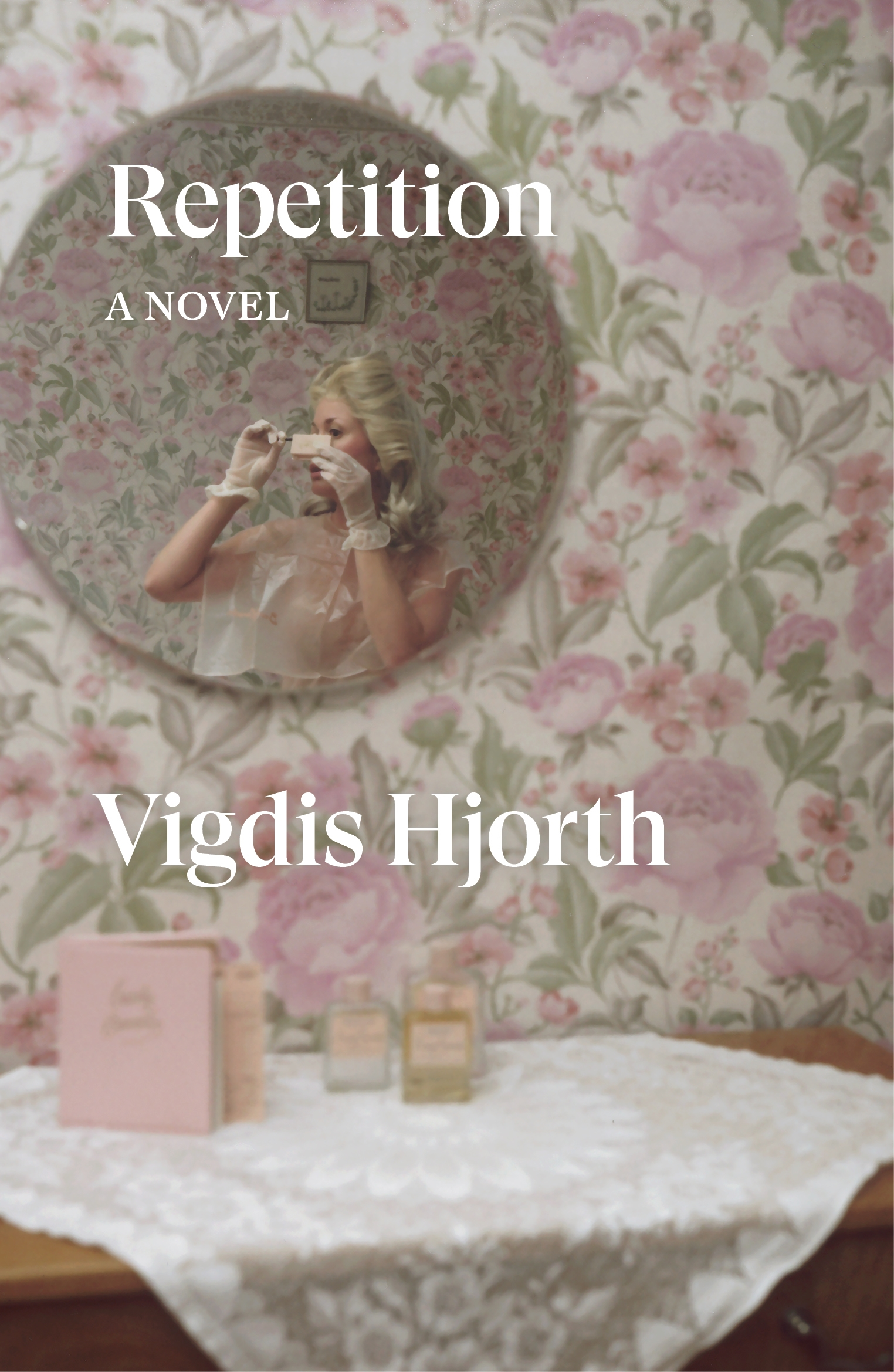
In her new novel, Repetition (first published in Norway in 2023), Hjorth delves into the experiences of a teenage girl whose burgeoning sexuality creates conflict with an abusive father and paranoid mother. “It’s not a secret that this book is autobiographical,” she told me frankly of Repetition, while also emphasizing that it is a work of fiction. At age 66, delving into memories of her experiences as a teenager is by necessity an act of imagination. Regardless of how fictional Repetition is, it provides a devastating window into how families live in the aftermath of childhood sexual abuse. Though the narrator’s father committed the crime, it is the mother who surveils and harasses her, terrified of any hint of sexual behavior. Later, when her mother discovers the narrator’s diary, in which she has written a vivid sexual fantasy, her parents act as though she has somehow violated them, instead of the other way around.
Perhaps losing her family in the wake of Will and Testament has allowed Hjorth both to speak more freely about her creative project, and lowered the stakes in writing about the brutal family dynamics she describes in both these novels. In Will and Testament, protagonist Bergljot maintains some form of hope that her family will be able to hear her. The novel’s pages are filled with her anxiety about interacting with her family members and the anger and devastation that comes every time these hopes are dashed. Repetition is as morally uncompromising as Will and Testament, but it is also a calmer novel, focused on analyzing the past. “If your family cuts you out and you accept that, you understand there is no way back. They don’t want to have contact with me,” Hjorth says. “Even though it’s a big, big sorrow and it’s hurt you, and maybe you are hurt in a way that never can [heal], you are also set free. It’s a kind of earthquake.”
In a conversation conducted over Zoom, we discussed the complicated position of women in her mother’s generation, the tendrils of sexual abuse, the Danish writer Tove Ditlevsen, and more.
Morgan Leigh Davies: In Repetition, you explore how child abuse affects other relationships within a family, not just the primary abusive relationship that we might focus on.
Vigdis Hjorth: That’s how family problems can be. Things happen, and maybe you can talk about what happened. Maybe you cannot. When grown-up siblings are talking about, What kind of family did we grow up in? they will have very different views. They will tell different stories about what they have experienced. When Will and Testament was read so widely, it must not have been because that many daughters or sons have experienced sexual abuse, but because a lot of them have experienced violence in a physical or psychological way.
You have the feeling you cannot talk about it, and if you try to talk about it, your siblings, or your mother, or the rest of the family, don’t want or aren’t able to believe you. It’s a pattern that must be more common than I knew when I was writing the book.
MLD: I found the depiction of the mother in this book really interesting. You make an effort to imagine the thought process she is going through—even though she’s failed in her responsibility to her daughter, she’s also in an incredibly difficult position. What was the process of trying to enter that consciousness?
VH: When you try, as a grown-up child, to understand your childhood, you very much want to excuse your parents. You try to explain how they could react as they did, because the worst thing is to conclude that, Oh, they didn’t care about me. They didn’t love me. They do not love me. You try to explain it: She had to do it, she had no other choice. But I also think that this is a question about generations. Most women were economically [dependent] on their husbands, that’s why they couldn’t divorce. They had no power: not in society, not in their marriage. Their only power was to have children that behaved, and a clean house. Their status depended on that. That explains how many of these mothers maybe had the feeling that something was not right, something must have happened, but they didn’t really want to find out because then they would have a dilemma that would be impossible to solve.
Maybe these mothers can’t imagine how important they are in their child’s life.
I let the mother character have a lot of space: Will and Testament and Repetition talk a lot about the daughter’s relationship to her mother. It’s just me guessing. And then this little girl that happened to be an author is looking at her thinking: Where is Mother? What is Mother thinking? What does Mother understand? And maybe these mothers can’t imagine how important they are in their child’s life.
MLD: Especially in that era where there wasn’t as much discussion about the psychology of children.
VH: Yes, yes, yes. For that generation of women, not in bourgeois but in middle class life, the main concern was, Do my children behave? And that was everything.
MLD: I would imagine especially for girls, right? In Repetition, that idea is so tied to sexuality, which is the worst kind of misbehavior possible. This mother knows on some unconscious level that this has happened to the narrator. Her intrusions into her daughter’s sexual life are not the same as sexually abusing a child, but it is a weird continuation or contribution to that abusive environment.
VH: I think that the mother in the novel, unconsciously or not, knows something has happened. She is suspicious, but she cannot ask the question. It’s an impossible question to ask. She knows that if she asks, the answer will be no, and she also knows that she will never be able to find the right words to ask. How do you ask a four- or five-year-old girl about that?
So what shall she do when she can’t ask? She observes the daughter’s behavior. Her nightmare is that this girl, at 15, 16 years old, will be promiscuous, because even at that time, everybody knew girls that behaved like that often had abuse stories. It sends a signal to the society that something is not right.
MLD: That comes to a head with her parents reading her journal, in which she describes her sexual fantasies. It’s very upsetting to imagine being violated in that way, especially by your parents. The narrator then says that this experience stopped her from writing for many years after. You’ve said before that writing isn’t therapeutic. But it obviously does serve some function or we wouldn’t do it, and suddenly this character no longer has that.
VH: Writing about your problems doesn’t solve them, but you can find something out. Sometimes I say, I don’t know what I mean before I see what I write. My writing is more intelligent and wise than myself. Maybe that’s because we have to talk to so many people during a day, and do a lot of unnecessary talk, but when we write, we can come closer to what is important.
I wrote a lot when I was a child. Not interesting things. But I must have found that writing, or drawing, was a way to calm down, to concentrate. When I was 14, 15, I started to write a diary. That was even more calming. I think I say in the novel, “Why do I write her or she when I mean me?” So it’s not a secret that this book is autobiographical, but I’m also afraid to use that term because what you write in 100 or 200 pages cannot capture what really happened.
What you write in 100 or 200 pages cannot capture what really happened.
When the girl in the novel—me in reality—makes up what happened with this boy she had fantasized about, inspired by porn magazines the boys had, that is a kind of fiction: her first fiction. That was a very special experience. I had this feeling of what literary inspiration was. I was really making it up. That had a much [stronger] impact than anything else I had said or written before. It was an insight into the power of fiction. It was impossible to say to my parents, It’s not true. It’s fiction. I made it up. I dreamed it. So in that first fiction experience, I saw the impact it could have. It was very traumatic in one way, but I also found out that it was a very powerful tool.
MLD: It’s so significant that it’s a sexual fantasy, that you’re able to create something that’s so different from the abuse. It’s no wonder you’re writing so fast and feeling so connected. The whiplash of that immediately being seen by your parents must have been extreme.
VH: Yes, it was. That’s why I can never forget it. When I say that I dreamed it, I didn’t dream it as a porn film. I wasn’t sitting there getting horny. It was not like that. It was as if I had been drinking or taken something. That was also the first time I felt free and lifted up by writing. The sentences were flowing, the words were coming. There was this feeling of everything going and going; the pen was flying over the paper. The most fabulous feeling as a writer. It has nothing to do with sexuality, but what she’s writing about are these phrases from porn and from romantic films. It’s a language every young girl that had seen films, especially American ones, at that time had inside them. It transformed my, her, body into language: all these longings, one scene after the other. It was the first time I ever experienced being taken away by an activity, forgetting everything else, just being in it. It was a lovely feeling.
She never read that again, of course. I never read it afterward because I threw everything away. But it would be very interesting to see what quality was in that piece of writing. I think it must have been a kind of singing, a kind of song. The Sámi people in Northern Norway that I met in my youth sang to each other, they sang their experiences. To me, it was the first song I made.
MLD: How did you get back to that process after so many years of not doing it?
VH: I used to tell this as a funny story. Often, when women are together, we talk about: How was your first time? Tell me about your first time. I told this story to make everybody laugh because nothing happens. It’s so stupid. Everybody laughed when I said that this boy was putting his arm around her shoulder and saying, “Now, you have become a woman.” I made it a funny story, and it is a funny story. But a month before I started to write this novel, I told it at a literary festival, everybody laughed, and when I went home, I felt so stupid and so guilty because I hadn’t taken myself as a 15-year-old girl seriously. So I tried really hard to find out, How did she really feel? In fact, it was a big trauma for her because she couldn’t say to her parents that her writing was a fantasy. She was left alone with this and couldn’t tell anybody because it was so shameful. I had forgotten that loneliness and shame, or I didn’t want to see it. I felt sorry for the girl I was. So I decided to find out about her, and the way I find out is to write about things.
It’s difficult to say what the literary aspect of the sentences is and what the so-called truth is, because the truth is always ‘so-called.’
MLD: It’s interesting to hear you say, Of course, this is me. The story of Repetition appears briefly in Will and Testament. For very understandable reasons, in interviews from five to 10 years ago, you really emphasized that your work was fictional. How much are you thinking about these books as part of a wider project? Are you thinking about people reading them together, or do you not think about reception at all?
VH: I’m not thinking about reception when I’m writing. But I would never have written a novel about my own difficulties if I didn’t think I shared this trauma with a lot of other people. I tried as much as I could to make the quarrel in Will and Testament—in-between the siblings, about the mother and the father—very common. I didn’t want it to be about my mother, my father, because then other people would have difficulty identifying with them.
It was stormy when it was published. Now I have nothing left to lose in my relationship with my family. They are lost to me because of Will and Testament. But I wouldn’t write a story to hurt them. Why should I? I write what I feel is necessary. And I think that what I write in Repetition is a phenomenon more common than we believe. Something has happened, it’s not possible to talk about it, but it has a lot of consequences. I use this true story because it is a good story. In one way, it is a funny story and it’s easy to identify with. In one way, you can say that this is one of the most autobiographical novels I’ve written. Still, it was written so long after I was 15. Was it like that? Or is this better fiction? It’s difficult to say what the literary aspect of the sentences is and what the so-called truth is, because the truth is always “so-called.”
MLD: I always like to ask people at the end if they’ve read anything recently that they really loved and would recommend.
VH: I read a lot and I love a lot, of course. This Sunday, I’m going to talk about Tove Ditlevsen, the Danish writer. My grandparents were Danish. All Danish people had Tove Ditlevsen. She was not translated, but they were living nearby. So that was the very first novel I ever read. Especially the third part of the Trilogy, Dependency. The first part is about growing up in the working classes, but you have read about that before. In Dependency, she’s writing about this milieu in Copenhagen where everybody slept with everybody, and she mentions every man she slept with and had children with by name. She writes about their children and abortion and everything. It was a big, big scandal. She was sued, of course. She was writing [in a sing-song voice]: He committed suicide, it was very sad, and I was taking this drug, and it was sad, and then I married this guy, and then the other one, and he had had children before, and that was way too busy for me, and then I was using this drug, and then I found another man.
She’s totally honest about everything, especially about abortion. When I’m talking about it, I’m not literary, but she’s literary. And so brave. She committed suicide. She had tried to commit suicide many times, writing about her attempts: she wrote about everything. Then more than 6,000 working-class women came to the funeral because she was the only one who wrote about their daily lives.
I’ll say one more thing. When she was in her sixties, this young journalist visited her in her home. You can see this on film. And he asked, What would you say if a former lover came to you and said that you’re not that good in bed? And she said, I am, I’m really good. Where’s the bedroom?
She’s a hero: very inspiring. [whispers] But I’m not as good in bed as she is.
The post Finding Words for the Worst Kind of Misbehavior appeared first on Electric Literature.




 Bengali (Bangladesh) ·
  English (United States) ·