
 1 month ago
44
1 month ago
44 
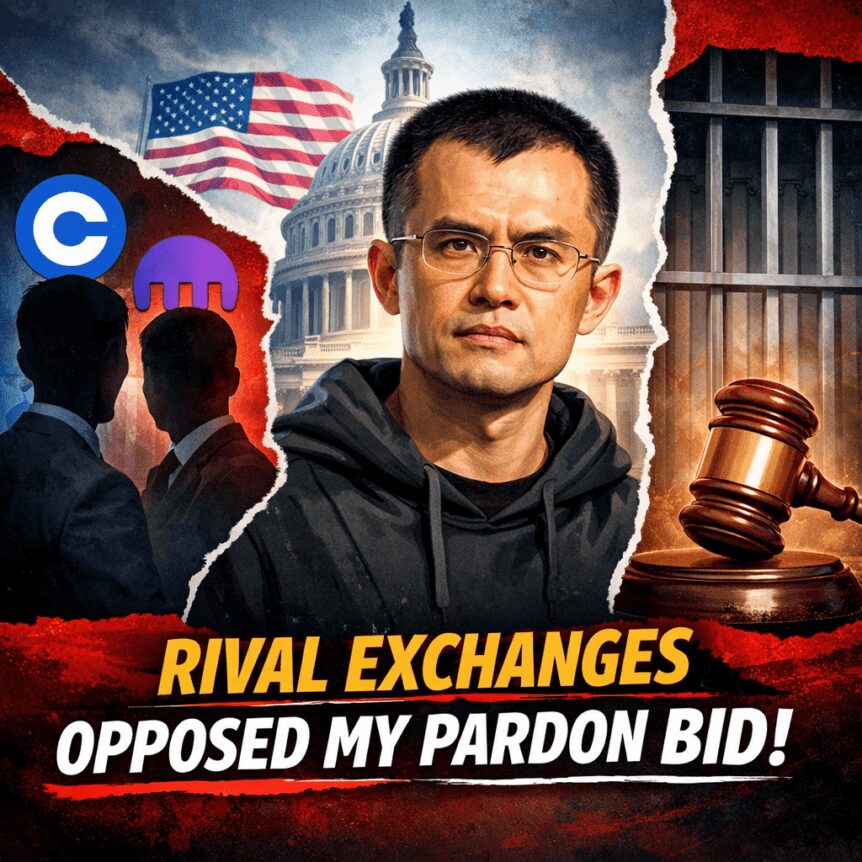
Binance founder Changpeng “CZ” Zhao has framed his trajectory in the U.S. crypto saga as a political and legal chess game, noting that a presidential pardon—even after a four-month prison term—hung on contested lobbying dynamics inside Washington. Zhao, who completed his sentence in September 2024 amid a sprawling set of U.S. probes and a $4.3 billion settlement tied to Bank Secrecy Act and IEEPA violations, said in a recent interview that he was not “very confident” a pardon would come, citing resistance from some competitors within the U.S. market. The remarks come as Binance navigates a patchwork of U.S. regulatory expectations while its U.S. arm has slowly re-emerged.
Speaking with Ran Neuner on the Crypto Banter podcast, Zhao suggested that rival exchanges in the United States lobbied against any favorable disposition toward him, even as Binance looks to re-enter a market it exited in late 2023. The exchange’s U.S. operations were halted after a broad settlement with U.S. authorities and tied to the company’s failure to register adequately as a money transmitter and broader AML controls. The four-month sentence and the subsequent settlement have loomed large over Binance’s U.S. strategy, even as the company seeks to rebuild trust with users and regulators.
Key takeaways
Pardon timeline and competing narratives: Donald Trump pardoned Zhao in October 2025, more than a year after Zhao completed his four-month sentence in September 2024. Zhao indicated that strong lobbying opposition from U.S. rivals may have shaped perceptions around the pardon process. Binance.US partially returns to the U.S. market: Binance.US resumed operations for eligible U.S. users in February 2025, months before Zhao’s pardon. Ongoing legal scrutiny and a narrow victory in court: A federal court in Alabama granted a March 2024 motion to dismiss a complaint accusing Binance, Binance.US, and Zhao of facilitating transfers to terrorist groups, signaling internal pressure points in the broader legal battle. Public framing of the future: Zhao has repeatedly framed crypto’s long arc as moving toward “invisible infrastructure” by 2031, suggesting a future where digital assets are seamlessly embedded in daily life rather than discussed as crypto in isolation.Regulatory tides, court decisions, and the road to normalization
The U.S. regulatory environment for crypto has remained fragmented, with high-profile enforcement actions shaping market expectations and corporate strategy. Binance’s 2023 exit from the U.S. market followed a settlement that charged the company with Bank Secrecy Act and IEEPA violations and failing to register as a money transmitter. The resolution, valued at about $4.3 billion, framed Binance’s U.S. operations as a cautionary tale for exchanges navigating a complex federal framework that blends criminal-justice oversight with financial regulation.
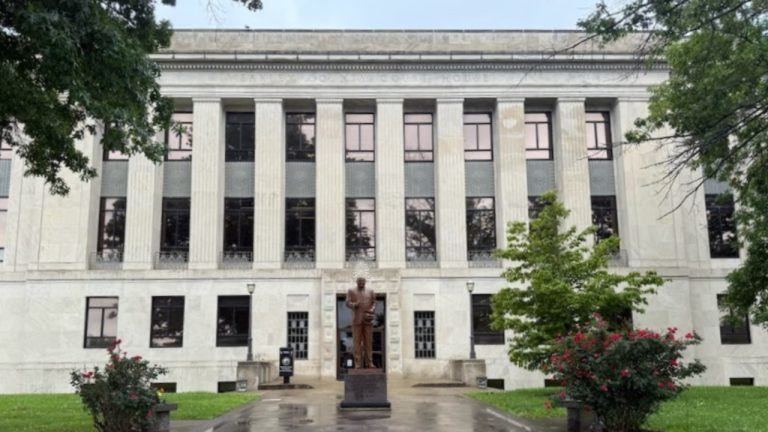
In the U.S. legal sphere, a March decision in Alabama added a separate dimension to the broader narrative. The federal court granted a motion to dismiss a 2024 complaint filed against Binance, Binance.US, and Zhao, which alleged that the entities facilitated transfers to terrorist groups. While not a ruling on the merits of the underlying claims, the dismissal underscores the legal system’s ongoing efforts to adjudicate complex cross-border crypto activity while addressing national-security concerns. The outcome does not erase regulatory risk, but it does illustrate how individual cases are resolved within the broader enforcement climate.
Against this backdrop, industry insiders and policymakers have kept a close eye on proposed legislation and regulatory benchmarks. The CLARITY Act has appeared in conversations as a potential framework to clarify the treatment of crypto firms and digital assets, with markup discussions noted as moving toward mid-May in various reports. While not providing a definitive policy verdict, these developments signal an ongoing effort to articulate clearer standards for exchange registration, AML controls, and consumer protections that could influence how fast and how broadly U.S. entrants like Binance may re-scale.
Looking ahead: Zhao’s long arc and the industry’s trajectory
Beyond the immediate legal and political back-and-forth, Zhao’s public remarks have consistently pushed a longer-term narrative: crypto should become an integrated part of everyday infrastructure—much like the internet itself—so that future users do not need to discuss “crypto” as a separate category. In a separate interview in April, Zhao reiterated that the goal is for crypto and blockchain technologies to blend into daily life to the point where the terminology fades from common parlance, akin to how TCP/IP or HTML does not dominate discussions about the internet today.
That reframing matters for investors and builders alike. If regulatory clarity progresses and enforcement actions are perceived as more predictable, the market could re-price risk and unlock new use cases in payments, cross-border settlement, and decentralized finance. For traders, the ongoing legal cases and potential future approvals will shape liquidity and market access for U.S.-based participants. For developers, clearer rules could accelerate enterprise adoption and the construction of compliant, interoperable infrastructure.
As Zhao’s narrative intersects with political timing, market dynamics, and judicial rulings, observers will watch several key questions unfold. Will the pardon translate into practical steps toward restoring Binance’s U.S. footprint in a legally compliant framework? How will Binance.US and other entities navigate ongoing scrutiny and new regulatory requirements? And will the vision of crypto as “invisible infrastructure” gain traction as policymakers finalize clearer, enforceable standards?
What readers should watch next
The coming months will reveal how much the pardoned status affects Binance’s strategic posture in the United States and how regulators respond to a more clearly defined framework for digital assets. Investors and users should monitor developments around U.S. regulatory actions, any new compliance milestones for Binance.US, and further court rulings or settlements that could alter the risk profile of participating in the Binance ecosystem.
In the meantime, Zhao’s public outlook remains a reminder that the crypto industry’s political and legal dimensions continue to interact with technology and market dynamics in fundamental ways. As enforcement, policy, and industry responses evolve, the path toward broader adoption—and toward crypto becoming an ordinary facet of financial life—will hinge on how credible, predictable, and scalable the regulatory environment proves to be in practice.
This article was originally published as CZ Claims Rival Crypto Exchanges Opposed His Pardon Bid on Crypto Breaking News – your trusted source for crypto news, Bitcoin news, and blockchain updates.


 Bengali (Bangladesh) ·
  English (United States) ·