

The first day of the 2026 Federalist Society Convention is in the can. There is much to report.
First, it is good to be back at the Mayflower--well at least good for those of us who made it in. Several years ago, FedSoc decided to move from the Mayflower to the Hilton, a much larger venue. The group had simply outgrown the classic hotel. The downside, of course, is that the Hilton is a terrible hotel. There were assassination attempts on two Presidents at the "Hinkley Hilton." There was no common meeting area, and attendees had to traverse a labyrinth of hallways between sessions. Worse, the rooms were a decade overdue for renovation. We hated it. But most of us were able to fit in.
This year, the registration for the national convention filled up almost instantaneously. I had planned to bring many of my students, but they simply never made it off the waiting list. Longtime members were hanging out in the lobby, hoping to make it off the waiting list, with no luck. I heard that the Harvard FedSoc chapter scheduled a conference for students who could not get in--apparently known as the "shadow docket." People complained to me, as if it was my fault we went back to the small Mayflower because of my carping about the Hilton. I get blamed for everything.
FedSoc will have to figure out what to do for next year, the 40th Anniversary of the National Lawyers Convention. We could always try to check out the new East Wing Ballroom, assuming Judge Leon doesn't enjoin it! The Gaylord Hotel in Maryland could fit everyone, but I am still scarred from the gala dinner there in 2016. I have long been a fan of holding the convention outside of D.C. It would send the exact right message. The times where people in D.C. offices can just stop by for a few panels are long gone. (The sold out registration means only those willing to attend the entire program will be there.) And anyone who wants to speak on the program of this platform should be willing to get on a flight. I would have recommended Texas for the venue, but we will soon be in hostile territory. Perhaps the free state of Florida is the last, best hope.
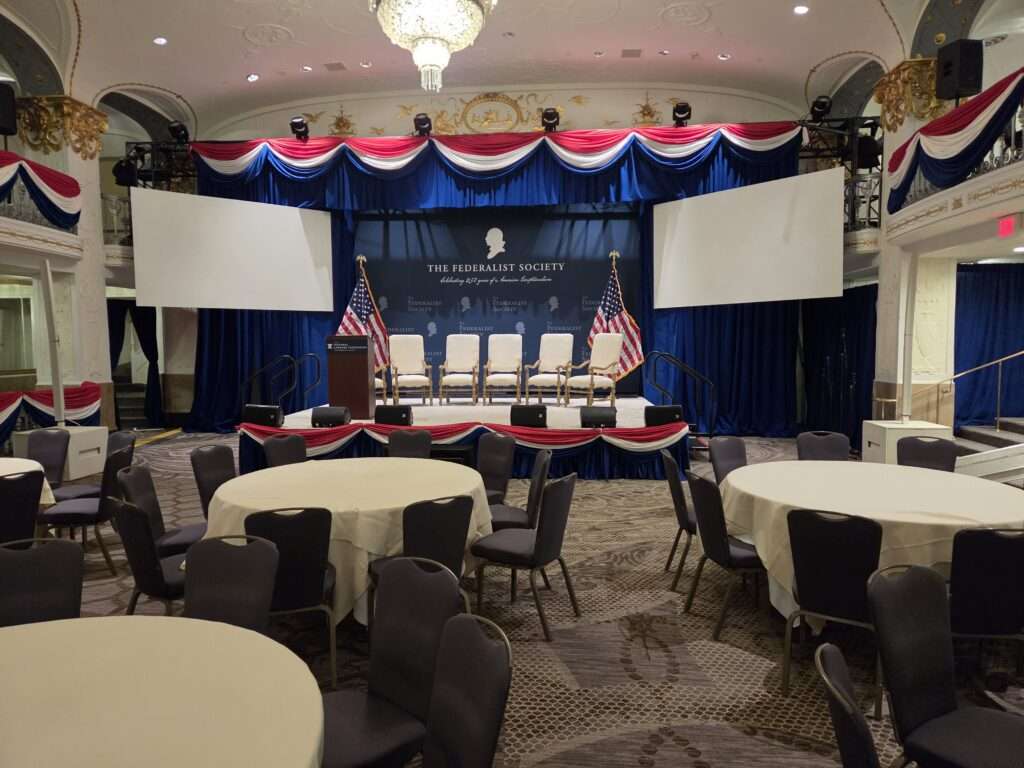
Second, the format of the FedSoc conference is different. I was so accustomed to the usual rhythm, I feel a bit disoriented. There are no breakout panels. Every panel is a "showcase" panel in the Grand Ballroom. The other rooms are overflow rooms with screens to watch the programming. The schedule is all different. The Rosenkranz Debate was on Thursday afternoon rather than Saturday afternoon over lunch. The Bork and Olson Lectures are both on Friday. And the program ends on Saturday at 2:15, about three hours earlier than usual. Also, instead of having lunchtime panels, all of the rooms on the second floor host smaller, intimate lunches. You could sit at a table with a judge and eight others to chat about an interesting topic. I was at Chief Judge Elrod's table to learn about the Lord of the Rings. (Trigger warning for commenters: I have never read any of those books, I fell asleep during the first movie, and never watched the others.) The discussion was fun! There are some judges who treat their judicial sinecures like Gollum treats the ring. How precious.
I see pros and cons to the new format. On the plus side, this format was far less overwhelming. I routinely felt drained by all of the content. Also, I always felt like I was missing something when I committed to a panel. As a result, I would often bounce between different panels, ensuring that I missed stuff. On the negative side, I enjoyed the ability to pick different panels that may be of interest. I thought the practice groups put on a wide arrange of topical panels. Moreover, there are far fewer speaking slots available with only a few panels each day. These are prime opportunities for up-and-coming members. Still, for this America 250 celebration, I liked the theme in which each panel was framed around a few words from the Declaration. This is an area I have studied for years, and I still learned quite a lot. I don't think we could have kept the Declaration theme going with breakouts.
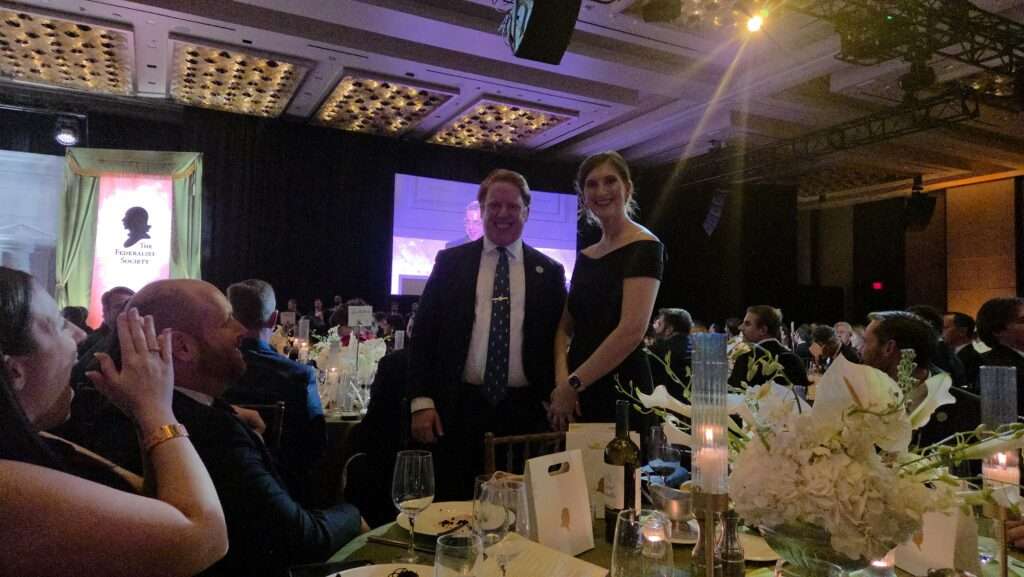
Third, there is a much stronger focus on students--the lifeblood of Fedsoc. I appreciated that each panel was introduced by a student, rather than the chair of the practice group. During the Scalia dinner, the winners of the Feddie student chapter awards were asked to stand up. I am so proud of the South Texas Chapter, and my students Ryan Lanier and Makayla Arthur, for winning the Hamilton Award for "Most Improved Chapter." Matthew Weinstein, the President of the UCLA chapter during the Percival protest, was given a courage award. And each of the Soc! lunchtime tables was hosted by a student chapter leader.
We can never forget that FedSoc was founded by a bunch of law students. Old people (present company included) need to always give the youth these sorts of opportunities. It wasn't that long ago that I met Will Scharf at the Mayflower, and now he is White House Counsel. I can say the same for so many current judges and other officials that I met when I was student. Indeed, some of the current judges hosted me as a Professor at their chapters! (In 2033, I'll be 49.) Everything that rises must converge.
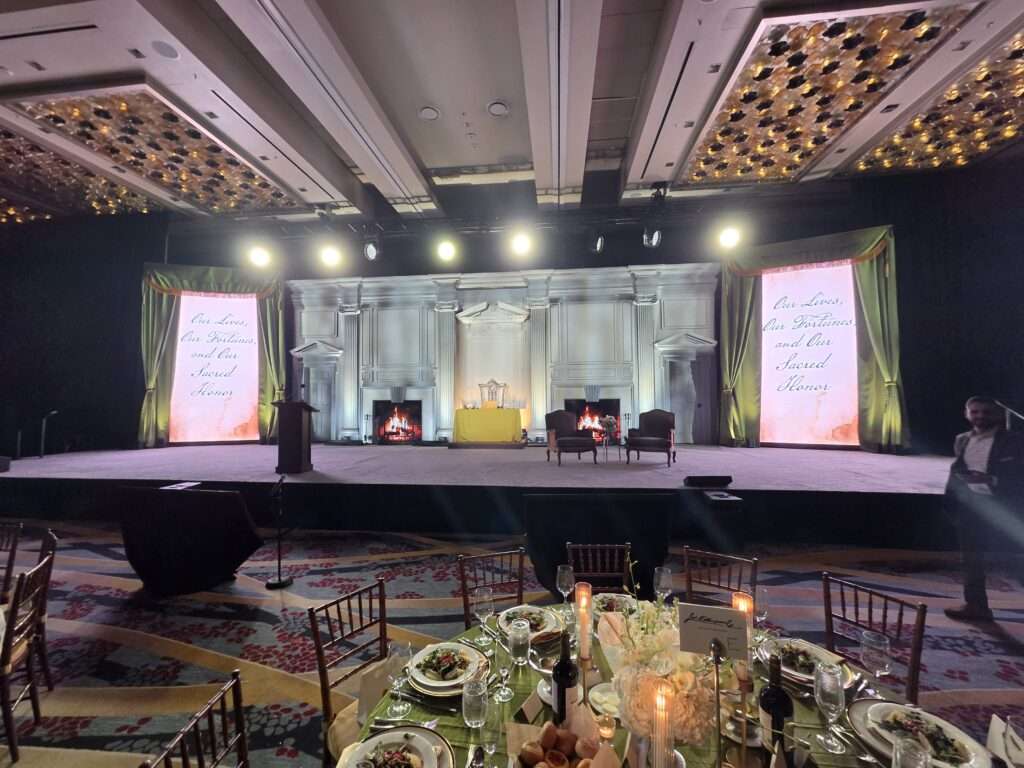
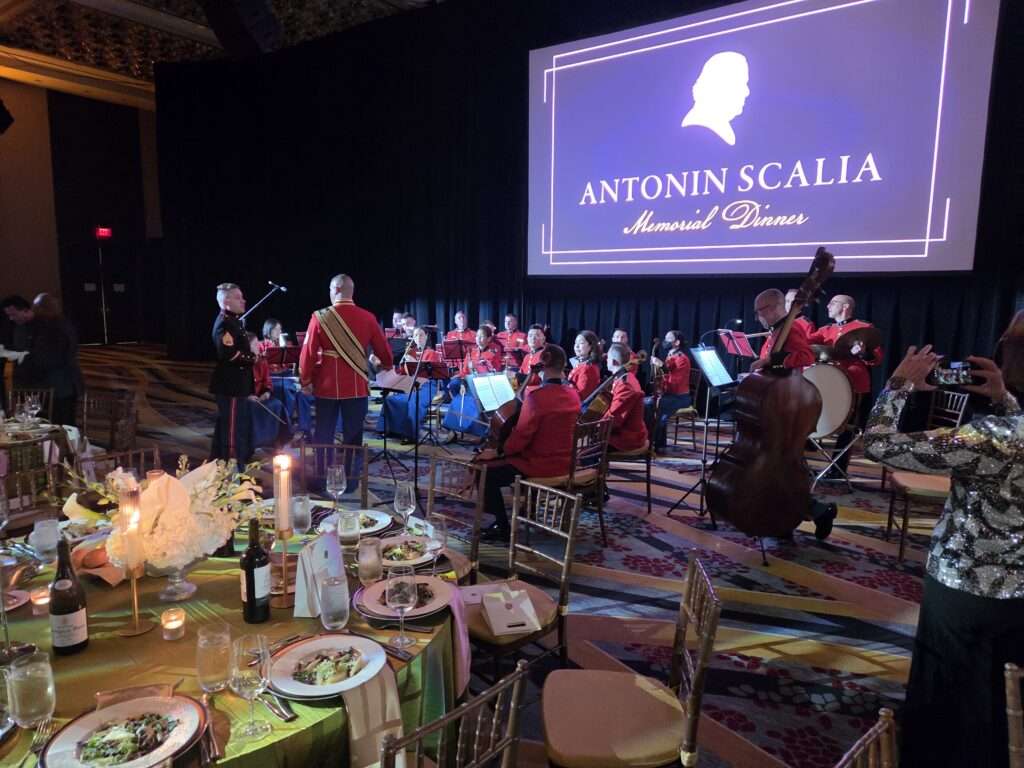
Fourth, the decoration of the Mayflower and the Marriott Marquis ballroom was top-notch. There is red, white, and blue bunting all over the Grand Ballroom. The backdrop of the Scalia dinner was expertly done, topped off with George Washington's bible! (No, we couldn't touch it.) The Marine Corp band played during the processional. The Madison Club reception was no longer crammed into a tiny, dark, and noisy tent. It was held in a spacious atrium at the Marquis. Moreover, Madison Club members have access to Edgar's as a lounge to get food and snacks during the day. What a really, really smart idea. This sort of attention to detail matters, at least to me.
Fifth the security is intense. Registration is now available on the lower level. No one is allowed into the hallway without showing credentials and passing through a body scanner. Large bags are banned and smaller bags are searched. The busses from the Mayflower to the Marquis were swept for security, and there was a National Guardsman on board. It is a sad commentary that we have to take these precautions. But with an actual assassination attempt against Justice Kavanaugh, I think we have to accept these costs. (During the Scalia Dinner, Justice Alito praised the courage of Justices Kavanaugh and Barrett for joining the Dobbs decision, knowing what risks that could bring.)
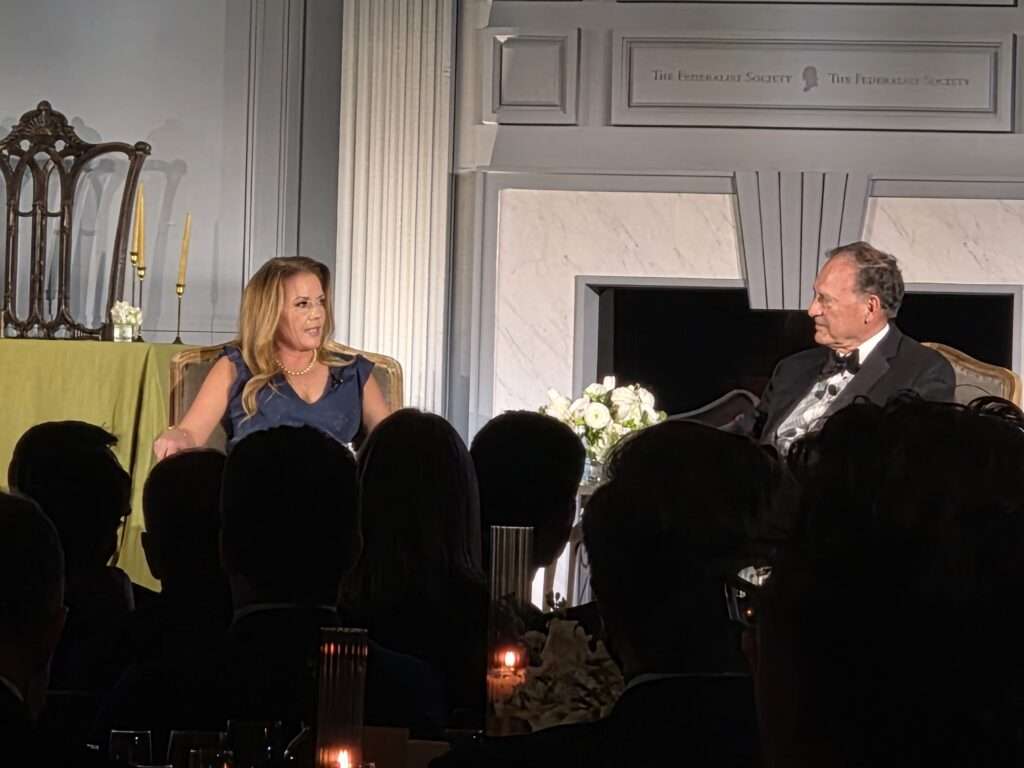
Sixth, I was sort of expecting the vibe at the Mayflower to be grim in light of last week's election. I remember how the 2008 convention felt something like a funeral. I think the mood was mostly one of shock. There are efforts in play to figure out how to deal with the loss of Attorneys General in Texas, Ohio, Iowa, and Kansas. Other states will have to pick up the heavy lifting. Lawyers in Austin can find safe refuge in Baton Rouge, Jackson, St. Louis, Nashville, Tallahassee, Montgomery, and other cities. I am currently researching the laws of intervention on both the plaintiff and defendant side, confessions of error in criminal cases, as well as standing for state legislators and the state senate. The agenda has shifted.
Seventh, one thing I love about the National Convention is that business is conducted right in the hallways. There is a strong sentiment to do everything we can to confirm the remaining judges. These aren't quite the midnight judges of the outgoing Federalist Party, but we are in a similar mindset. There is a universal agreement that Judge Rudofsky was screwed. I second everything my friend Rob Luther wrote in this op-ed in the Arkansas newspaper. And there is a concerted effort to help Elliot Gaiser get across the finish line. What a complete waste if this seat is left for James Talarico to fill. Talk about cutting off your nose to spite your six-gendered face. And then there's Todd Butler. Had the election turned out differently, things may have gone differently. But he is on the path to confirmation. I hope Butler proves me wrong--and he will have a quick opportunity to do so. The January en banc siting has a huge 922(g) case and a challenge to Texas's social media law. As for the new Eighth Circuit nominee, Cody Hiland, he have to prove a lot of people wrong.
More to come on Day #2.
The post Back At The Mayflower appeared first on Reason Magazine.




 Bengali (Bangladesh) ·
 English (United States) ·