
 1 month ago
10
1 month ago
10 
Aryna Sabalenka felt she threw her match away. She had won the first set and was 4-1 up on Diana Shnaider in the quarter-finals. She was also two points away from victory while serving at 5-4 in the second set. Then, she lost 10 consecutive games. The final score was 3-6, 7-5, 6-0, which was no reflection of how the match had begun for the Belarusian. She walked off Court Philippe-Chatrier, stating that she wanted to “quit tennis right now”, leaving fans wondering what her next step would be. Now, she has broken her silence ahead of her first grass-court outing of the season, and the conversation went much deeper than anyone could have predicted.
“We had a lot of chats with the team. I called my psychologist that I used to work with. It just felt like I needed to talk through everything I’ve been going through in the last I-don’t-know-how-many years,” Sabalenka said in Berlin ahead of her Grass Courts Championship Round 1 match against Ekaterina Alexandrova.
Sabalenka wanted to specifically talk about her issues in Paris and why such setbacks continue to plague her. It was an unusually honest admission from the world No. 1, and it showed how seriously she was taking what happened in Paris. This was not a player brushing off a tough loss with the usual talk of moving on. Sabalenka was trying to stop the pattern from repeating itself.
Today in Berlin, WTA #1 Aryna Sabalenka opened up about the psychological work she’s done after a shocking collapse two weeks ago at the French Open, trying to “dig deep” into her brain.
Read at Bounces:https://t.co/iSUkSmKTo6
— Ben Rothenberg (@BenRothenberg) June 15, 2026
This was no ordinary blow, and it wasn’t the first. In last year’s French Open final, Sabalenka took the opening set against Coco Gauff before the match slipped away amid a flood of unforced errors. Gauff won 6-7(5), 6-2, 6-4.
At this year’s Roland Garros, she produced 17 unforced errors in the deciding set alone and won less than 40% of points behind her serve, as Shnaider, in her first Grand Slam quarterfinal, reeled off game after game without resistance.
“I’ve tried to dig deeper in my thoughts to find what’s actually happening in those matches. I was going through all of the matches that I felt like, not like I should have won, but where I felt I had more opportunities, and I missed them. So I’m just trying to kind of dig deep in my brain, which is probably not a good idea. But let’s see where it’s going to lead me,” Sabalenka added.
Sabalenka acknowledges the difficulty of the situation and the pain of defeat. At 28 years old, with 95 weeks spent as the world’s No. 1, she finds herself grappling with some of the most profound questions in professional tennis.
“I feel like that’s the key to staying at the top: always searching for something, for that little one percent that’s going to bring a lot of good things and is going to make a great impact. I’m always searching. I know that I don’t have to change a lot. I know my strengths; I know my weaknesses. But I also want to understand myself a bit more, so I decided to dig a bit deeper,” she explained. The session with her former psychologist, who was unnamed, was part of that process, and she said it was truly beneficial, bringing about changes that she is now applying ahead of the grass-court swing.
2026 had otherwise been a strong year for Sabalenka until Roland Garros. She arrived in Paris having already won three titles: a WTA 500 event in Brisbane and back-to-back WTA 1000 crowns at Indian Wells and Miami. In Melbourne, at the Australian Open, she finished runner-up to Elena Rybakina. She was considered one of the favourites to reach the final, which was ultimately contested by Mirra Andreeva and Maja Chwalińska, with the former claiming her first Grand Slam title.
Unfortunately, the French Open remains the one major she has never won, leaving her with questions she has struggled to answer on the court. The psychologist, therefore, appears to be the latest tool in her search for those answers before the grass-court Grand Slam season begins.
Sabalenka Targets First Grass Title as Berlin Looms
This week, Berlin is about more than just a Wimbledon warm-up for Sabalenka.
She has 24 singles WTA titles to her name, but none have come on grass, a surface on which she has performed well without ever converting that potential into silverware. Having been granted a first-round bye, her opening match will be against world No. 19 Ekaterina Alexandrova, with whom she shares a 4-4 head-to-head record. So, it could promise to be a tricky encounter for the 28-year-old.
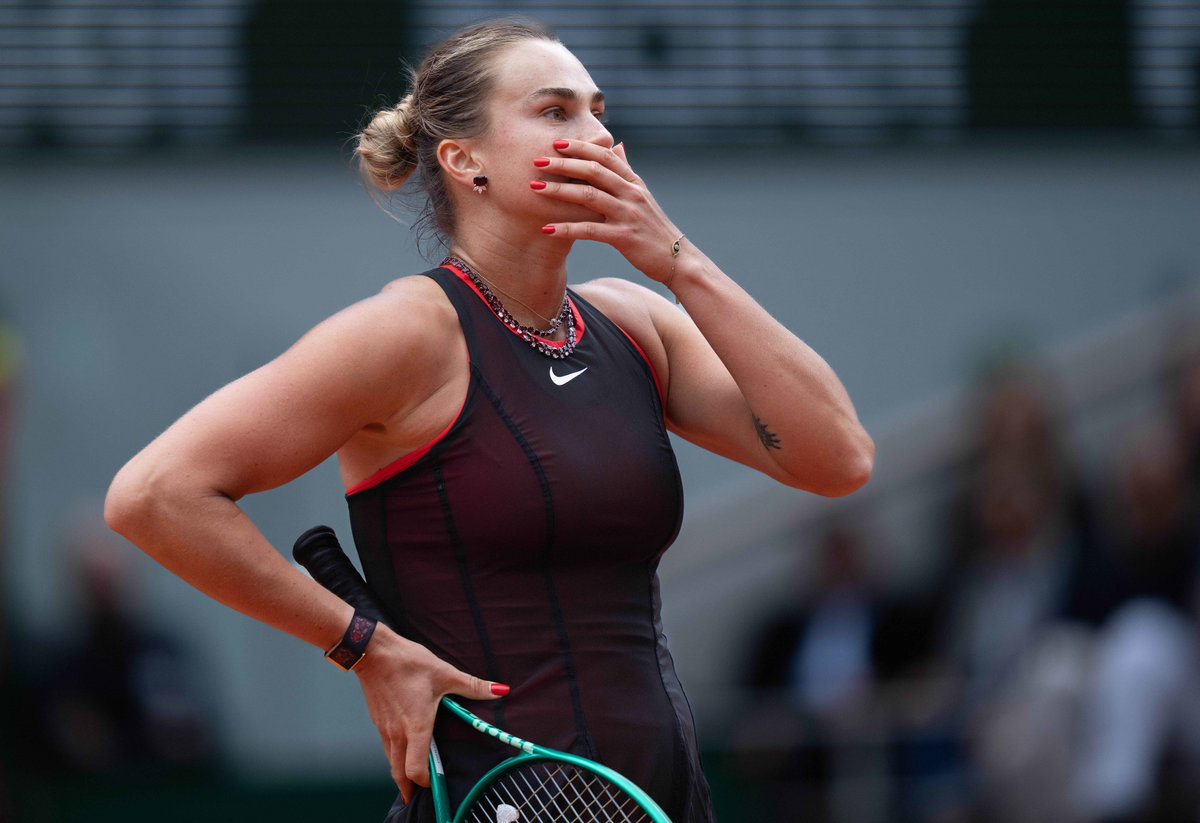 Jun 3, 2026; Paris, France; Aryna Sabalenka reacts during her match against Diana Shnaider on day 11 at Stade Roland Garros. Mandatory Credit: Susan Mullane-Imagn Images
But a win over Alexandrova and a deep run in Berlin would give Sabalenka a real chance to build momentum heading into Wimbledon. More importantly, the work she has done with her psychologist in the lead-up to the tournament could prove a bigger factor in her form than any physical training.
Sabalenka’s choice to discuss her mental health journey has broader implications. Historically, in women’s sports, especially tennis, female athletes have been expected to be tough and invulnerable, and the taboo around mental health still exists in elite sports. Sabalenka’s direct reference to seeing a psychologist, and how it was “really helpful,” is a statement that goes beyond one disappointing day in Paris.
She is framing it as exactly what she described: a searching process, one that she intends to keep open for as long as it takes. “As long as you’re open for something new, it’s definitely going to lead you somewhere,” she said.
Even after achieving so much in her career, Sabalenka is still searching for answers and striving for excellence, which is a more compelling story than any routine victory.
The post Aryna Sabalenka Confesses to Seeking Professional Mental Health Help After Brutal French Open Loss appeared first on EssentiallySports.


 Bengali (Bangladesh) ·
  English (United States) ·