
 4 hours ago
9
4 hours ago
9 
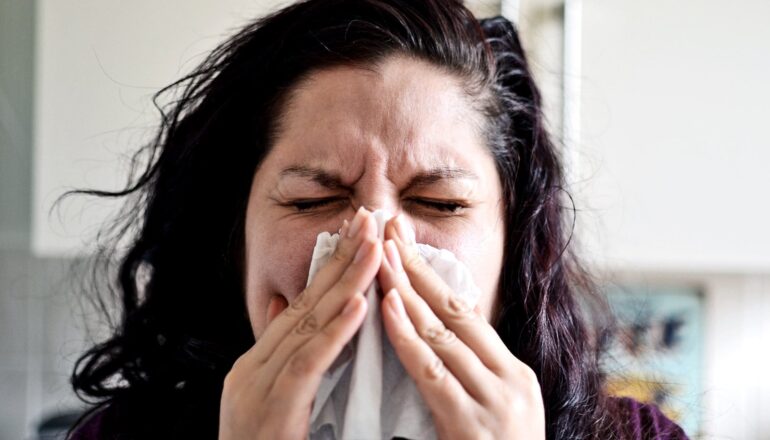
If you’re sneezing more than usual this spring, there’s a reason.
Allergy seasons across the US are starting earlier, lasting longer, and hitting harder, driven by warmer temperatures and rising CO2 levels that are increasing pollen production.
What’s more, people who have never had allergies before are suddenly developing them in adulthood—a trend that’s becoming increasingly common.
Lisa Olson-Gugerty, a teaching professor of public health in the Maxwell School of Citizenship and Public Affairs at Syracuse University and a practicing family nurse practitioner, can help explain this year’s allergy season.
Here are some of her insights:
Why this season feels different. Pollen seasons are not only starting earlier—they’re blending together across seasons, meaning the body’s immune system stays activated longer. When multiple trees pollinate at once, exposure becomes stacked and continuous, leading to more severe and persistent symptoms. Pollution compounds the problem by making pollen more irritating to airways. And a lesser-known phenomenon—”thunderstorm asthma”—can trigger severe asthma attacks when storms break pollen grains into tiny particles that travel deep into the lungs.
You are not born with allergies. First-time allergy symptoms in adulthood are very common, and the changing climate is expanding the pool of people affected. Anyone experiencing new seasonal symptoms this year shouldn’t assume it’s just a cold. Olson-Gugerty offers a simple rule of thumb: itching points to allergies; fever and body aches point to infection.
Kids are different, and parents often miss the signs. Children are more likely to develop ear infections, sleep disturbances, and asthma flare-ups during high-pollen periods, but they often can’t articulate their symptoms. Parents should watch for mouth breathing, unusual fatigue, irritability, and dark circles under the eyes—signs that are easy to overlook or misattribute.
The most common mistake allergy sufferers make. Olson-Gugerty says it’s waiting too long to treat. Allergy medications work best when started before symptoms peak, and taking them only as needed rather than consistently is one of the biggest reasons people struggle unnecessarily each spring.
Source: Syracuse University
The post Are you managing your allergies the wrong way? appeared first on Futurity.





 Bengali (Bangladesh) ·
  English (United States) ·