
 15 hours ago
1
15 hours ago
1 

Citizens vs. the System: School Mental-Health Contracts
Republished with permission from AbleChild.
Parents should not have to sue, face down public officials, or fight for access just to learn what mental-health programs are doing in schools and how public money is being spent. From Florida to Connecticut and Tennessee, citizens are challenging behavioral-health providers and contracts they believe have been protected from meaningful public scrutiny.
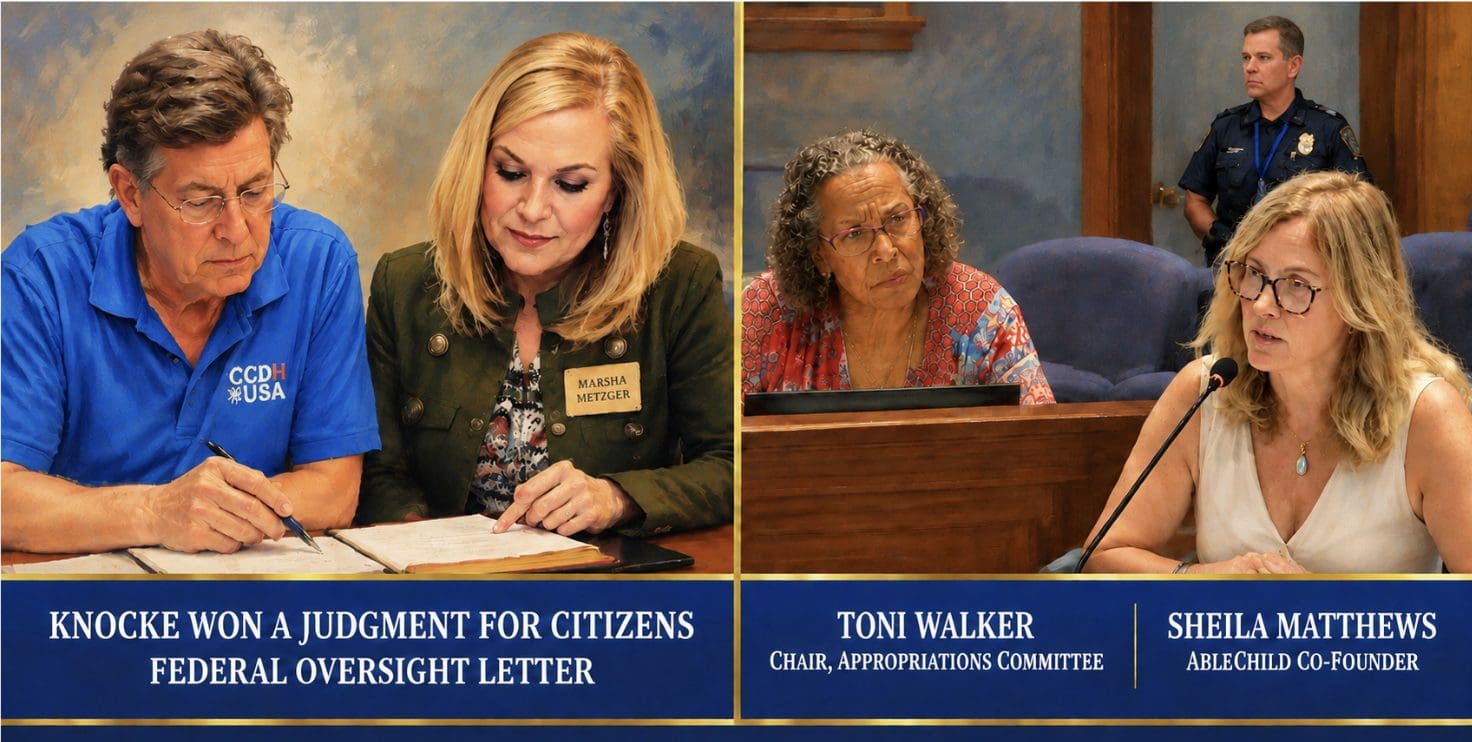
Jack Knocke, a citizen advocate, and Marsha Metzger of Parents On the Level sent FBI Director Kash Patel a detailed September 17 letter requesting federal scrutiny of school-based mental-health and social-emotional-learning platforms. The letter asks what students are shown, what information is collected, who can access it, and whether parents can inspect the programs and records.
Knocke won. After challenging Nassau County, Florida, over access to Ripple Effects curriculum records, Knocke obtained a court order requiring access. The judge also awarded attorney’s fees
The letter’s questions echo national headlines:
Can parents inspect what their children are shown? Knocke and Metzger report barriers to reviewing school materials. Recent reporting has described disputes over parents’ ability to obtain copies of school mental-health surveys after being allowed to view them.
Are students asked sensitive questions without meaningful parental notice and consent? The letter says review notes identified topics including sexual abuse, relationships, sexual consent, and pregnancy services. The authors want officials to verify what content exists and which students can access it. In August, the U.S. Department of Education issued guidance about PPRA and parental rights concerning mental-health screenings and sensitive surveys.
What happens to children’s answers and personal information? Knocke and Metzger ask what student journals and profiles collect, who can access the information, and whether parents can inspect their child’s records. Recent coverage of an Illinois school-screening initiative raised questions about how student information may connect to behavioral-health portals and follow-up services.
Parents need informed consent, a meaningful opportunity to understand a program and its questions before a child participates. Parents should have “PPRA” tattooed on their foreheads, figuratively speaking. The Protection of Pupil Rights Amendment gives parents rights concerning certain student surveys and instructional materials, including sensitive topics such as mental health, sex, and religious beliefs.
AbleChild’s concerns about school-based mental-health programs are rooted in years of advocacy. In Killingly, Connecticut, a survey of students in grades 7–12 reported that 14.7% of respondents had seriously considered suicide. AbleChild questioned whether the survey gathered important context, including whether students reporting suicidal thoughts were already receiving psychiatric treatment. The survey did not establish that. AbleChild argued that parents should have been told how the survey would be used, including its potential role in the campaign for school-based mental-health services.
A group of parents represented by attorney Andrew Feinstein pressed for the clinic. AbleChild challenged the funding and advocacy behind the proposal, including nonprofit and lobbying interests.
At a public hearing on federal funds allocated to Connecticut, AbleChild says the organization was the only member of the public present to address the funding. Written testimony had been submitted before co-founder Sheila Matthews arrived. When Matthews sought to testify about funding and accountability, Toni Walker, New Haven representative and House Chair of the Appropriations Committee, refused to allow that testimony. A police officer was stationed at the door. Matthews says Walker repeatedly addressed her as “ma’am,” despite prior work with AbleChild. AbleChild viewed the exchange as an effort to deter and intimidate the organization. The video of the exchange will let viewers assess the interaction directly.
AbleChild says Walker knew an AbleChild member who had to fight to obtain her son’s mental-health records after the child was placed on psychiatric drugs while in state custody. AbleChild says a complaint was filed with Attorney General William Tong concerning nonprofit and lobbying interests involved in the clinic campaign and submitted in the appropriation testimony, but no meaningful response followed.
The state’s complaint against Killingly was ultimately resolved through an agreement providing expanded school-based mental-health services, including services through Community Health Resources. The legal challenge was not settled by a clear ruling on the merits. Instead, the dispute ended in a political deal that sidestepped the unanswered questions and delivered the clinic campaign’s desired outcome.
In Hamilton County, Tennessee, AbleChild supported the school board’s decision not to renew its agreement with behavioral-health provider Centerstone. AbleChild questioned contract language stating that parents would be contacted “as is necessary” and asked what results the provider’s decade of work had produced. The district later revisited the issue and approved a process allowing multiple providers to offer services, with parental approval required before services begin.
AbleChild’s broader concern is that behavioral-health contracts can become entrenched while families and taxpayers struggle to obtain clear information about services, referrals, outcomes, and oversight. When public institutions spend public money, questions about performance and parental notification are basic accountability questions.
AbleChild has also fought for evidence and transparency in the discussion of mass shootings. The organization landmark law is spelled out in Tennessee legislation requiring toxicology testing for psychotropic drugs in certain fatal mass-shooting cases, along with a study of possible interactions with other substances found in the perpetrator’s system. The purpose is not to presume that medication caused a crime. The purpose is to ensure relevant evidence is collected so investigators, policymakers, and the public can examine the facts.
AbleChild has repeatedly called for lawful transparency about relevant mental-health records in mass-shooting cases. That is a request for a fuller accounting to protect public health. When schools and providers call for more screening and intervention, families deserve to know what programs do and what outcomes they produce. When violence occurs, the public deserves access to relevant evidence to the extent the law permits.
The Two-Word Answer
The solution for parents is simple. Two small words, joined by a hyphen: OPT-IN.
If parents want their children to participate, parents should opt in. No automatic enrollment. No hidden screening. No sensitive surveys or counseling-adjacent programs without a parent’s informed choice.
AbleChild believes an opt-in standard would restore parents’ authority and sharply limit the expansion of school mental-health clinics, subjective psychiatric labeling, and the pipeline into a multibillion-dollar behavioral-health industry. Parents decide first.
AbleChild is a 501(3) C nonprofit organization that has recently co-written landmark legislation in Tennessee, setting a national precedent for transparency and accountability in the intersection of mental health, pharmaceutical practices, and public safety.
Footnote: Knocke says that although they prevailed in Nassau County, they received no access after the district and nonprofit canceled their contract during litigation. In Putnam County, he and Marsha Metzger faced similar delays and obstruction, receiving only limited access and no usable copies. Parents reportedly opt into Ripple without seeing it or receiving meaningful disclosure.
What you can do. Sign the Petition calling for federal hearings!
Donate! Every dollar you give is a powerful statement, a resounding declaration that the struggles of these families will no longer be ignored. Your generosity today will echo through generations, ensuring that the rights and well-being of children are fiercely guarded. Don’t let another family navigate this journey alone. Donate now and join us in creating a world where every child’s mind is nurtured, respected, and given the opportunity to thrive. As a 501(c)3 organization, your donation to AbleChild is not only an investment in the well-being of vulnerable children but also a tax-deductible contribution to a cause that transcends individual lives.
The post ABLECHILD: Citizens vs. the System: School Mental-Health Contracts appeared first on The Gateway Pundit.



 Bengali (Bangladesh) ·
  English (United States) ·