

NASA's Voyager 1 spacecraft is now one light-day from Earth — so far away that it takes signals a full 24 hours to reach the probe.
Voyager 1 launched on Sept. 5, 1977, just a couple of weeks after Voyager 2 lifted off. But Voyager 1 launched on a faster trajectory than its twin and has just become the first spacecraft to ever reach one light-day away, which is equivalent to about 16 billion miles (about 26 billion kilometers), or the distance that one light particle travels in 24 hours. The milestone — which Voyager 1 hit today (Nov. 18) at 5:16 a.m. EST (1016 GMT) — shows the incredible ingenuity, technical ability and creativity from the teams at NASA that continue to innovate to keep this mission going nearly five decades later.
"The Earth and Voyager are exactly 24 hours apart at the speed of light," Voyager Project Scientist Linda Spilker told Space.com. "It's a very special moment where Voyager 1 is about 16.1 billion miles away, and we're celebrating that moment because it's the first human-made object to actually reach one light-day distance."
All things Voyager
The two Voyager spacecraft have been on one serious ride since launching in 1977. And each of these twin probes has taken a unique and historic journey through our solar system and beyond.
On Voyager 1's trip through our cosmic neighborhood, for example, it made countless groundbreaking observations of planets and moons that we had never before seen up close (or at all). The probe discovered a ring around Jupiter as well as the planet's moons Thebe and Metis. It also found five new moons and a new ring around Saturn.
"Voyager 1 flew past the Jupiter system and took images of Jupiter's moon Io, and it actually discovered that Io is volcanically active. So, images that were taken showed these volcanoes that were actively erupting, and we learned that Io is actually the most volcanically active body in our solar system, which is just amazing," Cynthia Phillips, a project scientist for NASA's Europa Clipper mission, told Space.com about one of Voyager 1's many discoveries.
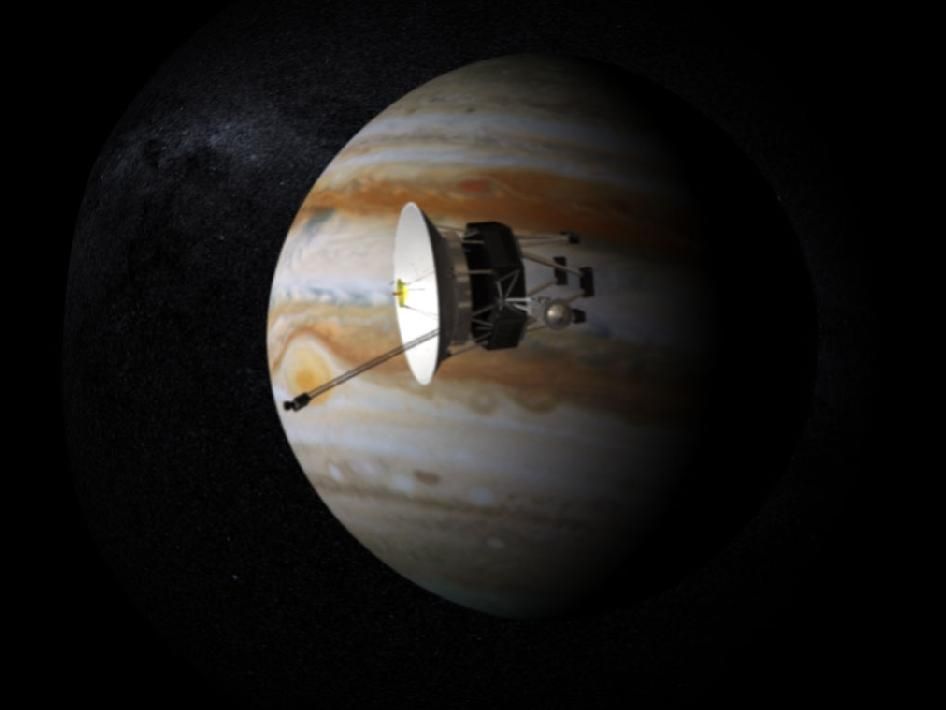 The Voyager 1 and Voyager 2 probes both flew past Jupiter in 1979, on their way out of the solar system. Represented here is Voyager 2's encounter with Jupiter.NASA/JPL
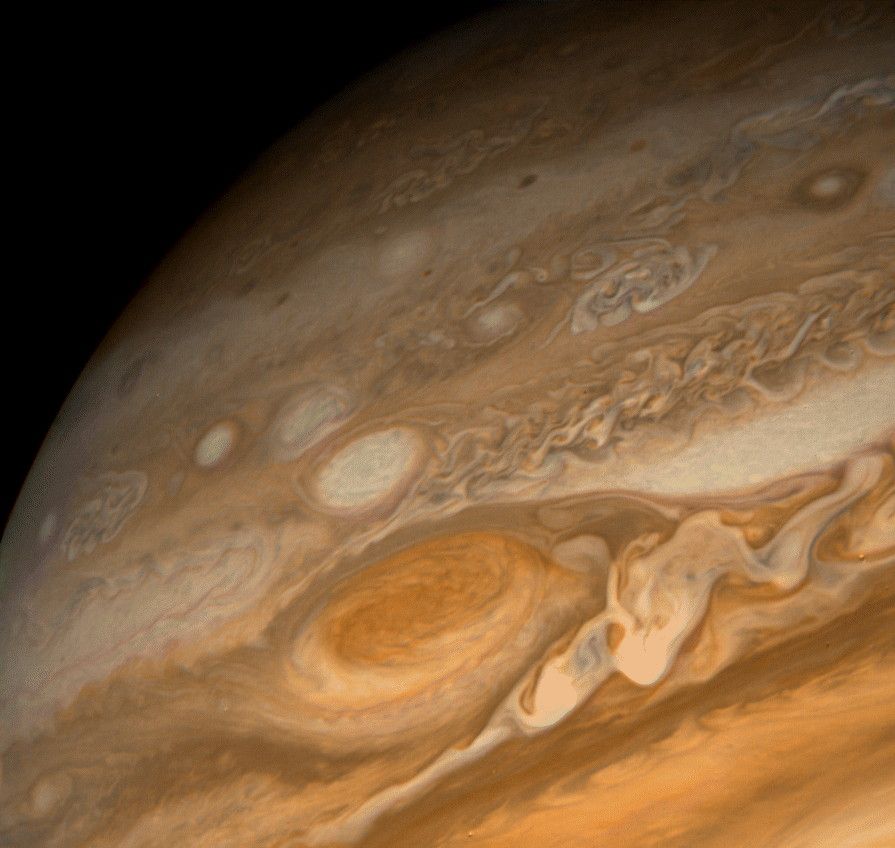 A close-up of Jupiter's Great Red Spot as seen by one of NASA's Voyager spacecraft.NASA/JPL-Caltech
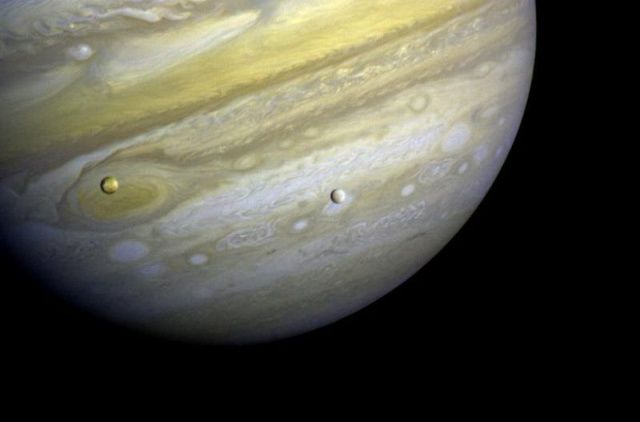 Voyager 1 took photos of Jupiter and two of its satellites (Io, left, and Europa). The new study says that moons orbiting a gas giant planet greater than 8 Jupiter masses could help astronomers detect a rogue planet. NASA/JPL
 A mosaic of Jupiter by Voyager 1.JPL
 Jupiter and two of its moons — Io, to the left, and Europa — as seen by Voyager 1 on Feb. 13, 1979.JPL/NASA
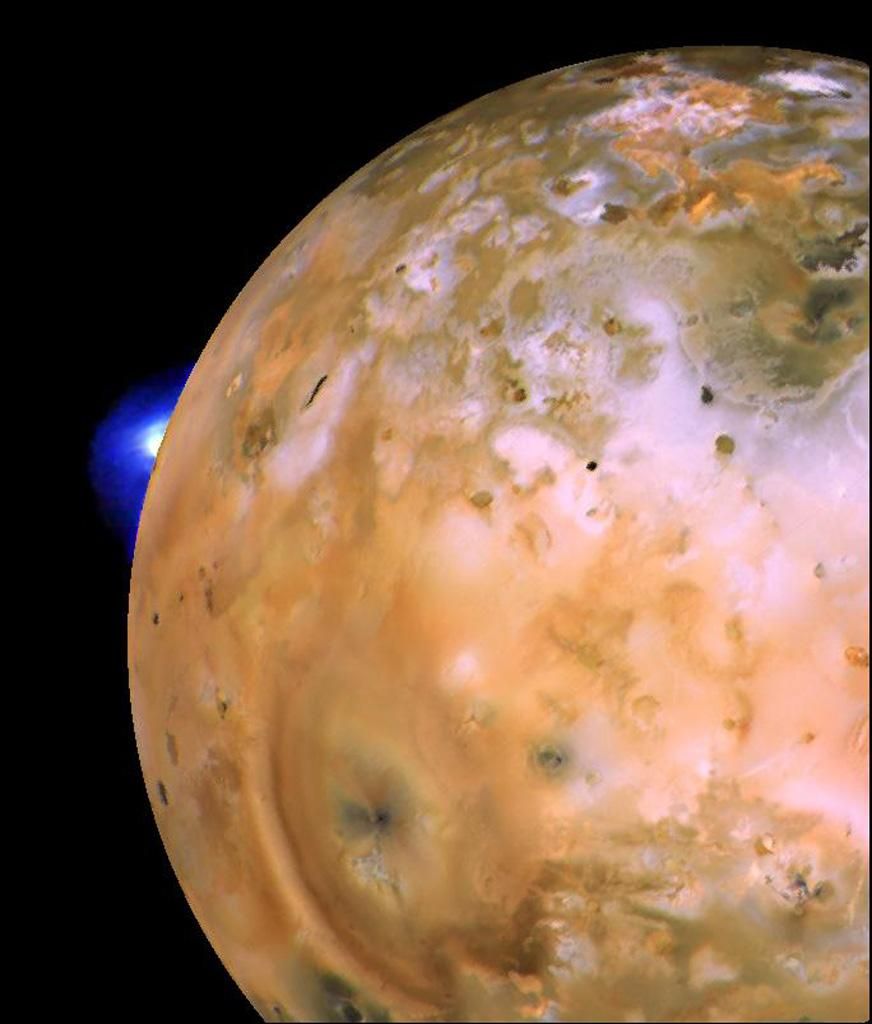 Voyager 1 image of Jupiter's volcanic moon Io, showing the active plume of a volcano called Loki. NASA/JPL/USGS
"And then, as Voyager 1 continued out to the Saturn system, it actually discovered that Saturn's large moon Titan has a very thick atmosphere surrounding it," she added. "So it's one of the only moons that has a thick atmosphere."
Decades later, Voyager 1's data is still incredibly important for scientists studying the planets and moons of our cosmic neighborhood. Phillips works on Clipper, which is on its way to study Jupiter's ocean moon Europa. And the basis of that work stems from early observations by Voyager.
"Every time I get to use data from Voyager, I have to kind of think back to where that data came from," Phillips said. "I think about kind of the legacy, the missions that really set the precedent for a mission like Europa Clipper. Voyager is right there at the top of the list. And some of those images that we took with the Voyager 1 and 2 spacecraft of Europa — they're actually still, for some portions of Europa, they're the best pictures that we have. So, we're still using that data today, almost 50 years later."
Today, Voyager 1 and 2 are both exploring interstellar space. On Aug. 25, 2012, Voyager 1 became the first human-made object to leave the heliosphere, or the protective bubble of solar particles that surrounds the planets and other objects in our solar system. After crossing that boundary, Voyager 1 entered interstellar space and has been exploring the interstellar medium ever since. Voyager 2 followed suit in November 2018.
While the Voyager spacecraft have left the heliosphere, they have technically not left the solar system, as they are still within the gravitational influence of the sun. Today, Voyager 1 is traveling 38,000 mph (61,155 kph) through interstellar space, exploring farther than any human-made object in history.
You need patience
The Voyager mission team communicates with Voyager in radio waves via the Deep Space Network, a collective of giant radio antennas that NASA uses to "talk" to a wide range of far-off spacecraft. And since radio waves travel at the speed of light, it now takes 24 hours for communications to reach Voyager 1, and then another 24 hours for any response to return.
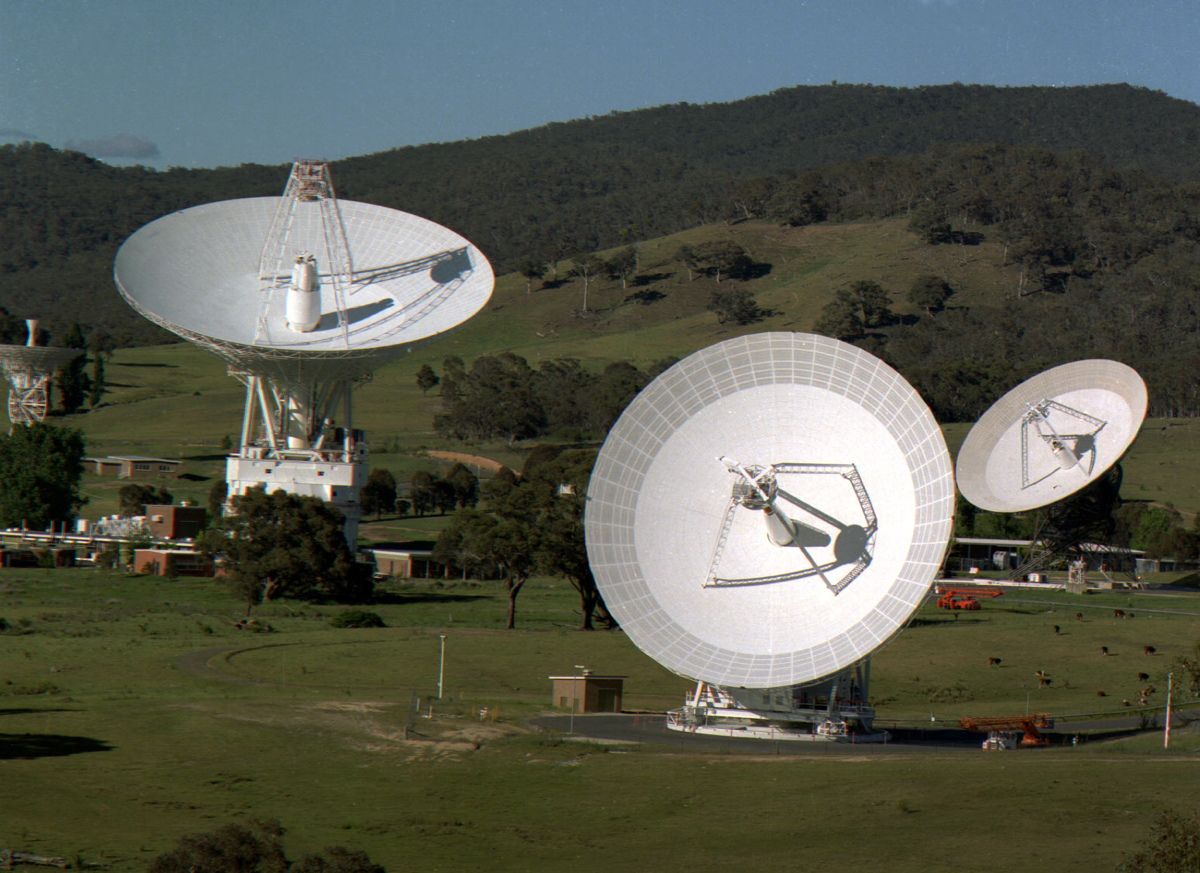
"You need to have patience because now, if you send a command to Voyager, Voyager receives that command 24 hours later," Spilker said. "So two days later, you receive confirmation that yes, Voyager one received your command and is sending back the information that you'd like it to send back."
That patience is important, as the nearly-50-year-old Voyager mission is still actively making science observations and collecting new data. While some of the probes' science instruments have had to be shut off over the years to save battery life, both probes are still going strong.
"It is always difficult when an instrument has to get turned off, knowing that it has returned good science data for so many years," Spilker said. "But a plan was laid down to make sure we had at least one instrument operating on each spacecraft, one type of instrument, for as long as we could."
As long as the mission is active, the team will continue to investigate the unknown with Voyager. After all, ever since the probes entered interstellar space, they have been exploring areas of space that we've only ever studied remotely or in theory.
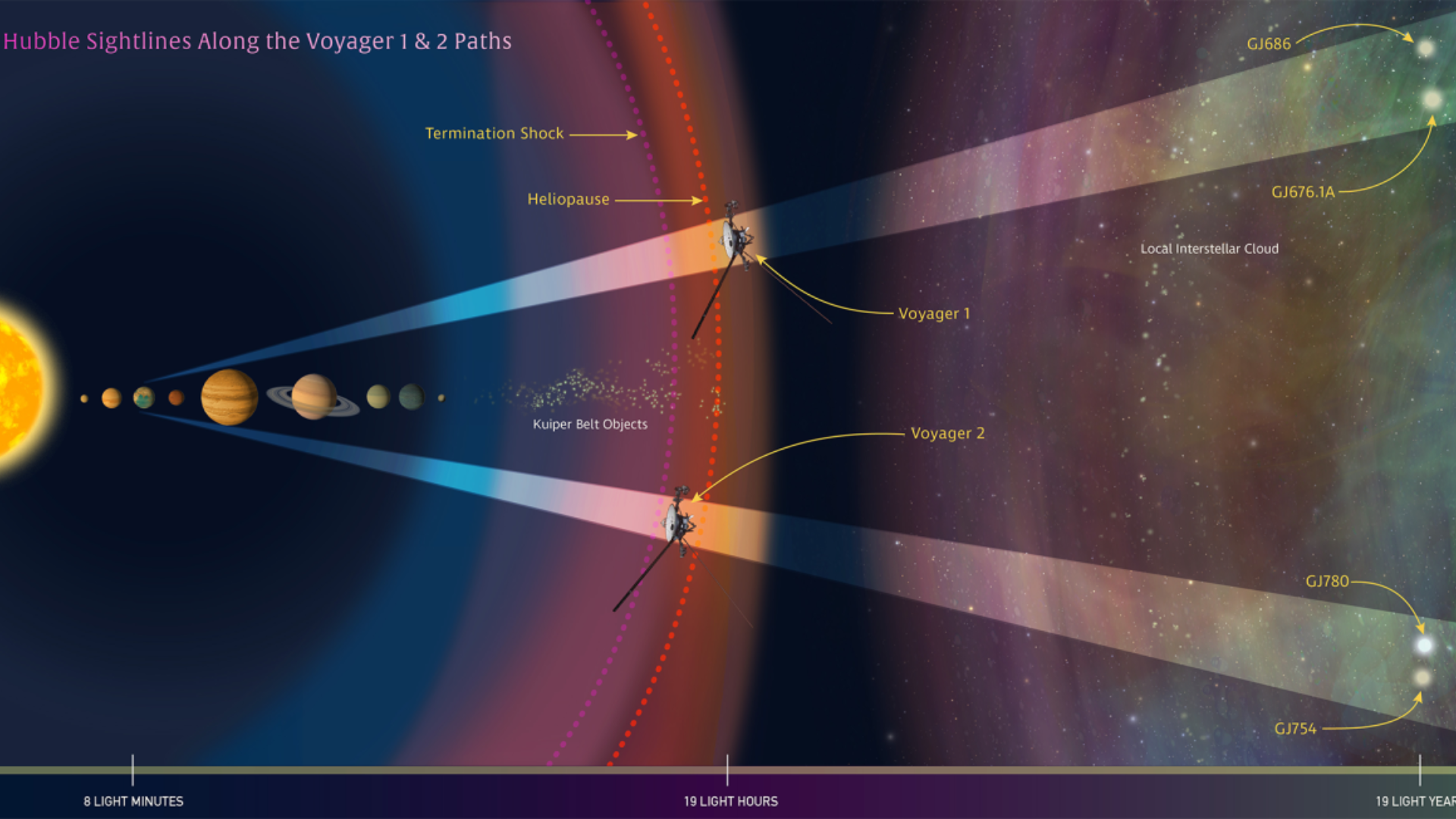
"Voyager 1 crossed the heliopause in 2012, and what we knew about interstellar space at that point really came just from remote observations and theories. And so, right away, Voyager started to find that what we expected was not exactly right," Spilker said.
So far, the team has found that the sun's influence extends much farther from the heliopause than they expected. The Voyagers have observed and measured "ripples coming from the sun," as Spilker described them, deep in interstellar space.
"Voyager is going to continue to measure the cosmic rays and particles, and also the radio waves coming from interstellar space and coming from the sun," Spilker said, adding that the team is always eagerly "waiting to see if there might be more surprises out there."
An enduring legacy
How has this mission from the 1970s continued to not just survive but actively push forward through all of that time, overcoming countless hurdles and unexpected challenges?
"Voyager's longevity is really a tribute to all of the people who worked on Voyager, from those who designed the spacecraft, built it, programmed its computers, launched it, and then the teams of individuals that have flown it over that 50 years," Spilker said.
Spilker is a longtimeVoyager veteran. Fresh out of school, she started her NASA career with Voyager, working on the mission for about a decade before moving on to NASA's Cassini Saturn mission. After Cassini concluded with a dramatic death dive into Saturn in 2017, Spilker returned to Voyager, where she serves as a project scientist today.
"I'm very proud and happy to work on Voyager," she said.
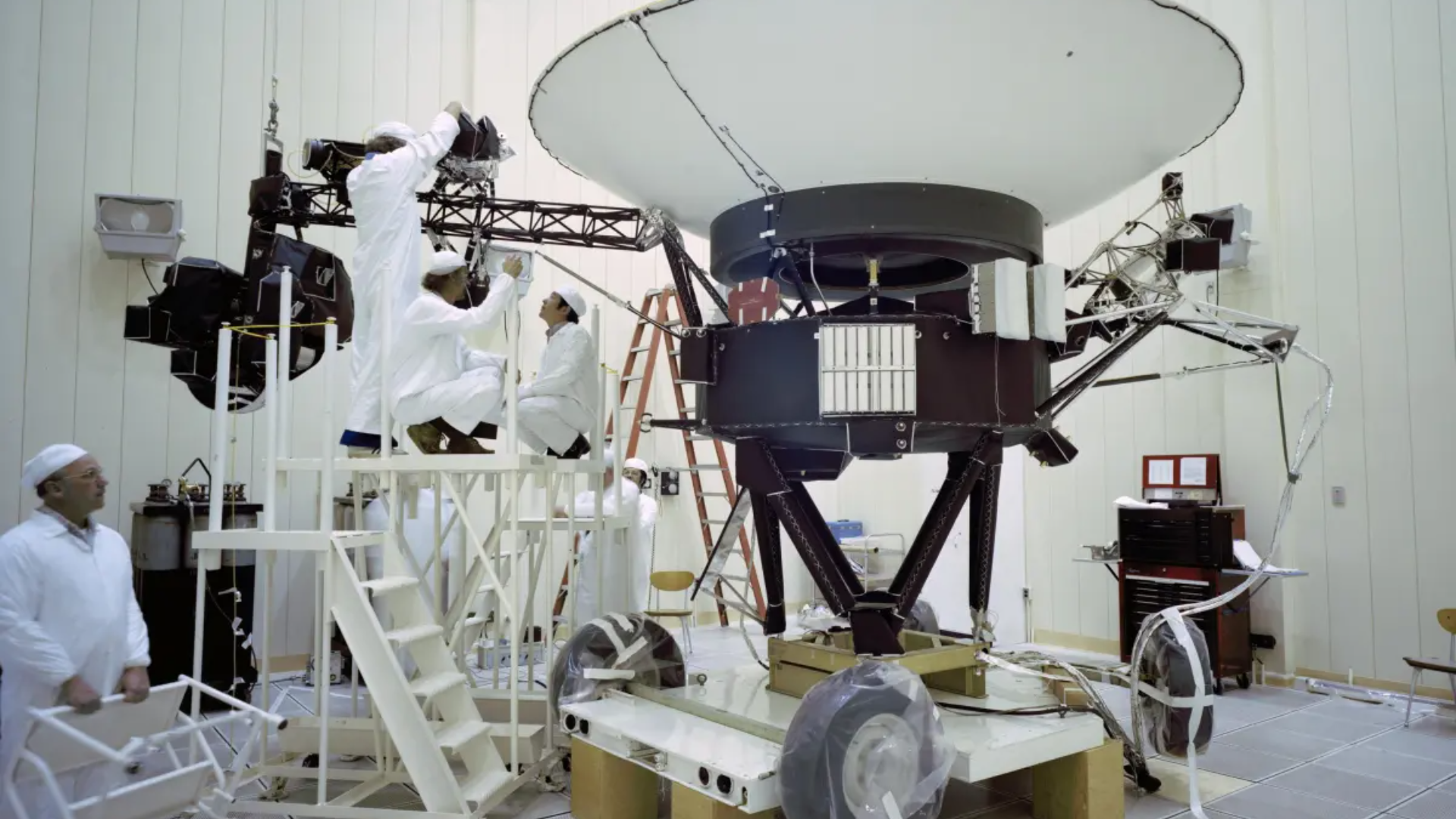
The Voyager team is small, with just eight to 10 people on the flight team, according to Spilker. But they often bring in retired scientists and Voyager team members from decades past who are eager to share their knowledge and connect with the new generation of mission scientists and engineers.
"Voyager is multi-generational," Spilker shared. "We have someone whose parents weren't born when Voyager was launched, and then we just celebrated the 90th birthday of one of the members who retired and came back. He actually helped to build and program the computers on Voyager."
Looking to the future, the team is pressing on full speed ahead to continue science with Voyager. Another big milestone is just ahead, when the mission turns 50 this upcoming year. And Spilker is optimistic that this will not be the end.
"I see the 50th anniversary as just a milestone," Spilker said. "The next milestone, and then we'll just keep on going."
As Voyager 1 hits one light-day from Earth, you might wonder whenVoyager 2 will hit the same milestone. Since Voyager 2 is on a slower trajectory,it won't reach one light-day from Earth until 2035, nearly a decade into the future. The Voyagers are both hardy and tough, so it's not crazy to think the probe may still be alive when it crosses that threshold.


 Bengali (Bangladesh) ·
 English (United States) ·